A table saw is arguably the heart of any woodworking shop, a precision instrument capable of transforming raw lumber into finished masterpieces. But like any high-performance tool, its longevity and cutting accuracy hinge significantly on diligent care and routine maintenance. Neglecting your table saw not only compromises the quality of your work but, more importantly, can lead to dangerous operational hazards. By adopting a proactive maintenance approach, you ensure your table saw, even a brand-new model in 2026, remains a safe, reliable, and precise cornerstone of your craftsmanship for years to come.
Why Regular Table Saw Maintenance Matters
Maintaining your table saw isn’t just about keeping it shiny; it’s a critical investment in your safety, the quality of your work, and the lifespan of the tool itself. Consistent care builds confidence, knowing your machine will perform exactly as expected, every single time.
Enhancing Safety and Precision
A well-maintained table saw is a safe table saw. Components that are clean, aligned, and properly lubricated drastically reduce the risk of common hazards like kickback, blade binding, or inaccurate cuts. When the blade, fence, and miter gauge are perfectly calibrated, you achieve superior precision, leading to cleaner cuts and less material waste, ultimately making your woodworking projects shine. For shop curated table saws on this site.
Extending Tool Lifespan and Value
Table saws represent a significant investment, and regular maintenance is the best way to protect that investment. By preventing the buildup of sawdust and resin, lubricating moving parts, and addressing minor issues promptly, you minimize wear and tear on critical components like the motor, arbor, and trunnions. This proactive approach significantly extends the operational life of your saw, maintaining its performance and resale value.
Avoiding Costly Repairs
Ignoring small maintenance tasks can quickly escalate into major, expensive repairs. A dull blade can strain the motor, leading to premature failure. Accumulated dust can overheat electrical components. Proper and consistent maintenance acts as preventative medicine, catching potential problems early and saving you from costly service calls or part replacements down the line.
Daily and Pre-Use Maintenance Checks
Before you make that first cut, a quick routine check can make all the difference, ensuring optimal performance and safety. These simple steps should become second nature to any table saw operator.
Blade Inspection and Cleaning
Before each use, take a moment to visually inspect your saw blade. Look for any signs of dullness, chipped carbide teeth, or excessive pitch and resin buildup. A dull or dirty blade forces the motor to work harder, creates burn marks on your material, and increases the risk of kickback. If necessary, remove the blade and clean it with a specialized pitch and gum remover, or a mild detergent. Ensure it’s dry before reinstalling.
Tabletop and Fence Cleanliness
|
Our Picks for the Best Table Saw in 2026
As an Amazon Associate I earn from qualifying purchases.
|
||
| Num | Product | Action |
|---|---|---|
| 1 | 4" 60W MINI ELECTRIC TABLE SAW BENCH TOP GREAT ELECTRIC HOBBY CRAFT TABLE SAW DIY Power Tool Work Bench Stand Circular 2 PIECES Blades |

|
| 2 | PROXXON Table Saw FET for Precision Cuts in Wood, Non-Ferrous Metals, Plastics - Adjustable Blade, Extendable Table, Low Noise Motor, 110-120V AC - 37070 |
|
| 3 | Lapidary Rock Saw for Cutting Rocks, 750W Mini Lapidary Equipment for Jewelry and Gemstone Polishing, 110V Table Saw Grinder Machine with Polishing Kit for Jade Agate Wood and Beeswax |
|
| 4 | Woodworking table saw, can be installed in the operating table, 25kg saw blade can be adjusted up and down 55X36X40 cm |
|
| 5 | POWERTEC Portable Small Workbench with Vise, Imprinted Ruler and Protractor Scale, Folding Sawhorse/Worktable and 4 Bench Dogs for Woodworking Projects (MT4006V) |
|
| 6 | Skil 3550-02 7-Inch Wet Tile Saw with HydroLock Water Containment System |
|
| 7 | SKIL 3601-02 Flooring Saw with 36T Contractor Blade, Red and black |
|
| 8 | VEVOR Band Saw, 9-Inch, Woodworking Benchtop Bandsaw with 1/2 HP Motor, 3.5-Inch Max Cutting Height, 11.8 x 11.8 in Cast Aluminum Table, 0-45° Tilting Range, with Miter Gauge, Fence, for Woodworking |
|
| 9 | SKIL 7-Inch Wet Tile Saw - 3540-02 |
|
| 10 | POWERTEC Push Block and Push Stick Set Fits Table Saws, Router Tables, Band Saws & Jointers, Dual Ergonomic Handles w/Max Grip, Wood Pusher Reduces Kickback & Increases Safety. 5PK (71009V) |
|
A clean tabletop is crucial for smooth material feeding and accurate cuts. Sawdust and resin can create friction, causing workpieces to drag or bind. Use a brush or shop vacuum to remove all debris. For cast iron tops, periodically wipe them down and apply a quality paste wax or a dry lubricant to create a slick, protective surface that prevents rust and allows wood to glide effortlessly.
Guard and Safety Mechanism Verification
Always verify that your blade guard, anti-kickback pawls, and splitter or riving knife are correctly installed and functioning. The blade guard should move freely. The anti-kickback pawls should engage properly. The splitter or riving knife should be aligned with the blade to prevent binding. These components are vital for your safety, designed to minimize the risk of kickback.
Power Cord and Switch Safety
Before plugging in your saw, quickly inspect the power cord for any fraying, cuts, or exposed wires. Ensure the plug is in good condition. Test the power switch to confirm it operates smoothly and that any emergency stop features are readily accessible and working correctly. A damaged cord or faulty switch can pose serious electrical hazards.
Routine Cleaning and Lubrication
Beyond daily checks, a more thorough cleaning and lubrication schedule is essential to maintain the intricate mechanics of your table saw. This goes deeper than surface-level cleaning and addresses the moving parts that make your saw operate smoothly.
Comprehensive Sawdust Removal
Sawdust and fine wood dust can infiltrate every nook and cranny of your table saw, from the internal cabinet to the motor vents and adjustment gears. Periodically, unplug your saw, remove the throat plate and blade, and use a shop vacuum and compressed air to meticulously clear out all accumulated debris. Pay special attention to the motor housing and any ventilation slots to prevent overheating.
Tabletop Rust Prevention and Smoothing
The material of your table saw top dictates its specific maintenance needs. Cast iron tops, while incredibly durable, are prone to rust. After cleaning with a light oil lubricant and fine steel wool to remove resin or surface rust, apply a coat of automotive or paste wax. This creates a protective barrier and reduces friction. Aluminum and steel tops are less susceptible to rust but still benefit from regular cleaning with mild soap and water, avoiding harsh chemicals that could scratch or damage the surface.
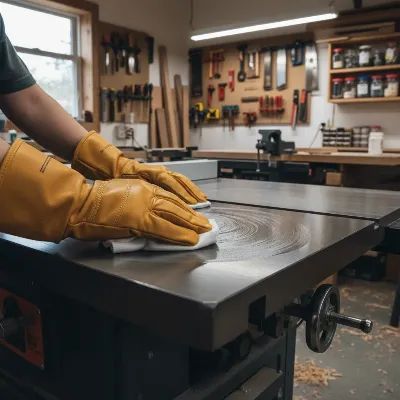 Woodworker applying paste wax to a cast iron table saw top for rust prevention and smooth operation
Lubricating Moving Parts
Many internal components of your table saw, such as the gears, trunnions, and pivot points for blade height and tilt, require lubrication to operate smoothly. Consult your owner’s manual for specific lubrication points. Use a drying spray lubricant, as recommended by many manufacturers, to prevent sawdust from adhering and forming a gummy residue. Avoid using regular oil on areas that can attract and bind with sawdust.
Belt and Motor Inspection
If your table saw uses a belt drive, periodically inspect the belt for signs of wear, cracks, or fraying. Ensure it has the correct tension – too loose, and power transfer is inefficient; too tight, and it can strain the motor bearings. Also, keep the motor itself clean by clearing dust from its vents and housing to allow for proper cooling and prevent overheating, which can shorten its lifespan.
Blade Care, Replacement, and Storage
The blade is the business end of your table saw. Its condition directly impacts cut quality, efficiency, and safety. Proper blade management is a cornerstone of table saw maintenance.
Recognizing a Dull or Damaged Blade
You’ll know your blade is dull when you observe signs like burning on the wood, excessive tear-out, increased effort to push material through, or a noticeable decrease in cutting speed. A dull blade puts undue strain on the saw’s motor and can increase the risk of kickback. If you see missing or severely damaged carbide teeth, it’s time for attention.
Professional Sharpening vs. Replacement
For high-quality carbide-tipped blades, professional sharpening is often a cost-effective option that can restore their edge multiple times. However, if a blade has several missing teeth, a warped body, or significant damage, replacement is the safer and more practical choice. Always factor in the blade’s original cost and the cost of sharpening when making this decision.
Proper Blade Storage
When not in use, always store your blades properly. Avoid simply stacking them on top of each other, which can dull teeth or cause damage. Blade storage cases or racks protect the delicate carbide tips from impact and exposure to moisture, which can lead to rust. Keep them in a dry environment to maintain their sharpness and integrity.
Advanced Adjustments and Troubleshooting
While daily and routine maintenance keep your saw running, periodic advanced adjustments ensure it performs with the utmost precision. These tasks may require a bit more attention but are crucial for consistent accuracy.
Ensuring Blade Alignment (Parallelism and Perpendicularity)
One of the most critical adjustments is ensuring the blade is perfectly parallel to the miter gauge slots and perpendicular to the tabletop at 90 degrees. Any deviation can lead to angled cuts, binding, and kickback. Use a reliable combination square or a dial indicator to check these alignments. Your owner’s manual will provide specific instructions for adjusting your saw’s arbor or trunnion system to achieve perfect alignment. This should be checked annually or after any significant bump or kickback incident.
Rip Fence Parallelism and Miter Gauge Accuracy
A perfectly parallel rip fence is essential for straight, accurate rip cuts and to prevent workpieces from binding. Use a measuring tape or a dial indicator to confirm the fence is equidistant from the blade at both the front and back. Similarly, check your miter gauge against a known 90-degree square to ensure it’s cutting true angles. Adjust as necessary according to your saw’s specifications.
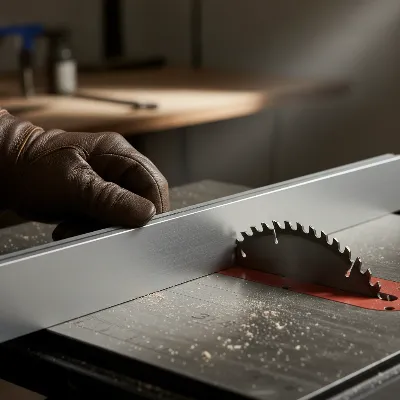 Close-up of a woodworker using a precision square to check table saw blade alignment for accuracy
Checking Belt Tension and Pulley Alignment
For belt-driven saws, proper belt tension and pulley alignment are vital for efficient power transfer and to prevent excessive wear on the motor and arbor bearings. Periodically inspect the belt for cracks or signs of wear and ensure it has the appropriate tension (typically a small amount of deflection when pressed). Use a straightedge to check if the motor and arbor pulleys are perfectly aligned, adjusting the motor pulley if needed, as outlined in your saw’s manual.
Safety First: Maintenance Best Practices
Safety should always be paramount when working with a table saw, and this extends directly to maintenance tasks. Developing safe habits ensures you protect yourself and your valuable tool.
Always Unplug the Saw
This is the golden rule of table saw maintenance. Before performing any cleaning, adjustment, or inspection, always disconnect the saw from its power source. This completely eliminates the risk of accidental startup, which could cause severe injury. Never rely solely on turning off the switch.
Using Appropriate PPE
Even during maintenance, personal protective equipment (PPE) is crucial. Wear safety glasses or goggles to protect your eyes from dust or debris. Gloves can protect your hands from sharp blades, splinters, and cleaning chemicals. A dust mask is advisable, especially when cleaning internal components, to avoid inhaling fine sawdust.
Consulting Your Owner’s Manual
Every table saw model has unique features and specific maintenance requirements. Your owner’s manual is an invaluable resource, providing detailed instructions for cleaning, lubrication points, adjustment procedures, and safety warnings pertinent to your particular machine. Always refer to it for model-specific advice.
Conclusion
Regular and thorough maintenance is not merely a chore; it’s an indispensable practice for any serious woodworker who relies on a table saw. By consistently cleaning away sawdust and grime, lubricating critical moving parts, ensuring precise alignment of the blade and fence, and prioritizing safety at every step, you are actively safeguarding your investment and, most importantly, yourself. A well-maintained table saw will consistently deliver accurate, clean cuts and operate safely, allowing you to focus on the joy of creating. What simple maintenance task will you tackle first to give your table saw the care it deserves today?
Frequently Asked Questions
How often should I clean my table saw?
For general sawdust and debris, clean your table saw after every use. A more thorough internal cleaning, including the motor and gears, should be performed every 5-10 hours of operation or as recommended by your manufacturer, and certainly before any long periods of storage.
What kind of lubricant should I use for my table saw?
Many manufacturers recommend a dry spray lubricant for gears, trunnions, and other moving parts to prevent sawdust from sticking and gumming up the mechanism. For cast iron tabletops, paste wax or specialized rust-preventative sprays are often used to create a slick, protective surface.
How can I prevent rust on my cast iron table saw top?
To prevent rust on a cast iron table saw top, regularly clean it with a light oil lubricant and fine steel wool to remove any residue. Follow this by applying a generous coat of automotive or paste wax, buffing it thoroughly. Storing the saw in a dry, climate-controlled environment and using a cover also helps.
