To safely restore a rusty table saw top, first disconnect power and clear the workspace. Then, assess the rust level: for light rust, use WD-40 and a Scotch-Brite pad; for moderate rust, apply white vinegar or oxalic acid with fine steel wool; and for heavy rust, use Naval Jelly or Evapo-Rust with gradual abrasive work. Always neutralize acids, clean thoroughly with mineral spirits, and protect the surface with silicone-free paste wax to prevent future corrosion.
Ignoring rust is like letting a small crack in a foundation grow—eventually, it undermines the entire structure. A smooth, clean table saw surface is paramount for wood to glide effortlessly, ensuring consistent, precise results. But how do you tackle rust safely and effectively without damaging the irreplaceable flatness of your saw table? This guide will walk you through the essential steps, from initial assessment to protective measures, ensuring your table saw returns to its optimal condition, ready for years of precise cuts.
Understanding Table Saw Rust and Its Impact
Rust, primarily iron oxide, forms when iron or its alloys (like cast iron) are exposed to oxygen and moisture. Your table saw top, often made of cast iron, is particularly susceptible to this process, especially in workshops with fluctuating temperatures and humidity levels. Condensation, stray water droplets, or even lingering sawdust that absorbs moisture can initiate the rusting process. For explore our table saws reviews on this site.
The consequences of a rusty table saw top extend beyond aesthetics. A rough, corroded surface significantly increases friction between the workpiece and the table, demanding more effort to push material through. This added resistance can lead to inconsistent cuts, inaccurate measurements, and even dangerous kickback situations as wood snags on the uneven surface. Over time, rust can also pit the cast iron, permanently affecting the table’s flatness and precision, which is crucial for high-quality woodworking. Addressing rust promptly and correctly is vital for maintaining both the performance and safety of your table saw.
Essential Tools and Materials for Rust Removal
Tackling rust effectively requires the right arsenal of tools and materials. Depending on the severity of the rust, you’ll need a combination of chemical agents and abrasive tools, always prioritizing safety and the integrity of your saw’s surface.
Rust Removal Agents:
- WD-40: Excellent for light surface rust and as a lubricant during sanding. It displaces moisture and can help break down initial corrosion.
- White Vinegar: A mild acid that can dissolve rust. Best for moderate rust. Allow it to sit, then scrub.
- Oxalic Acid (Wood Bleach): A more potent, yet still relatively safe, acid for moderate to heavy rust. Often available in crystal form to be mixed with water.
- Naval Jelly (Phosphoric Acid): A stronger chemical solution, often gel-based, designed to convert rust into a stable black compound. Requires careful handling and good ventilation.
- Dedicated Rust Removers: Products like Metal Rescue Rust Remover Gel or Evapo-Rust are designed to chemically dissolve rust without harsh scrubbing, often safer for the base metal.
Abrasives and Cleaning Tools:
- Stiff Metal Bristle Brush: For initial removal of loose, heavy rust flakes. Use with caution to avoid scratching the surface.
- Scotch-Brite Pads: Various grits are available; maroon (medium/fine) is commonly recommended for general rust removal without excessive abrasion.
- Steel Wool (Fine Grade): Effective for scrubbing, especially with lubricants or rust removers.
- Wet/Dry Sandpaper: Grits ranging from 220, 320, 400, up to 600. Start with finer grits and only go coarser if absolutely necessary. Using a sanding block ensures even pressure.
- Orbital Sander: Can be used with fine-grit sandpaper or Scotch-Brite pads for larger flat areas, but apply light pressure to prevent damage.
- Clean Rags and Paper Towels: For wiping, cleaning, and applying solutions.
- Putty Knife: Useful for spreading gel-based rust removers evenly.
Safety and Cleanup:
- Safety Glasses/Goggles: Essential to protect your eyes from rust particles and chemical splashes.
- Chemical-Resistant Gloves: Protect your hands from acids and harsh chemicals.
- Respirator/Dust Mask: Prevents inhalation of rust dust and chemical fumes.
- Mineral Spirits, Denatured Alcohol, or Lacquer Thinner: For cleaning off residues, oils, and neutralizing the surface after rust removal.
- Paste Wax (Silicone-Free): Johnson’s Paste Wax, pure carnauba wax, or Boeshield T-9 are excellent for long-term rust prevention and creating a slick surface. Ensure it is silicone-free to avoid issues with wood finishes.
Gathering these items before you start will streamline the process and ensure you can address any level of rust safely and effectively.
Step-by-Step Guide to Safely Cleaning Your Rusty Table Saw Top
Cleaning a rusty table saw top is a meticulous process that requires patience and adherence to safety. Follow these steps to restore your saw without compromising its precision.
Preparation and Safety First
|
Our Picks for the Best Table Saw in 2026
As an Amazon Associate I earn from qualifying purchases.
|
||
| Num | Product | Action |
|---|---|---|
| 1 | Skil 3550-02 7-Inch Wet Tile Saw with HydroLock Water Containment System |

|
| 2 | Lapidary Rock Saw for Cutting Rocks, 750W Mini Lapidary Equipment for Jewelry and Gemstone Polishing, 110V Table Saw Grinder Machine with Polishing Kit for Jade Agate Wood and Beeswax |
|
| 3 | Woodworking table saw, can be installed in the operating table, 25kg saw blade can be adjusted up and down 55X36X40 cm |
|
| 4 | SKIL 3601-02 Flooring Saw with 36T Contractor Blade, Red and black |
|
| 5 | POWERTEC Push Block and Push Stick Set Fits Table Saws, Router Tables, Band Saws & Jointers, Dual Ergonomic Handles w/Max Grip, Wood Pusher Reduces Kickback & Increases Safety. 5PK (71009V) |
|
| 6 | VEVOR Band Saw, 9-Inch, Woodworking Benchtop Bandsaw with 1/2 HP Motor, 3.5-Inch Max Cutting Height, 11.8 x 11.8 in Cast Aluminum Table, 0-45° Tilting Range, with Miter Gauge, Fence, for Woodworking |
|
| 7 | POWERTEC Portable Small Workbench with Vise, Imprinted Ruler and Protractor Scale, Folding Sawhorse/Worktable and 4 Bench Dogs for Woodworking Projects (MT4006V) |
|
| 8 | 4" 60W MINI ELECTRIC TABLE SAW BENCH TOP GREAT ELECTRIC HOBBY CRAFT TABLE SAW DIY Power Tool Work Bench Stand Circular 2 PIECES Blades |
|
| 9 | PROXXON Table Saw FET for Precision Cuts in Wood, Non-Ferrous Metals, Plastics - Adjustable Blade, Extendable Table, Low Noise Motor, 110-120V AC - 37070 |
|
| 10 | SKIL 7-Inch Wet Tile Saw - 3540-02 |
|
Before you begin any cleaning, safety is paramount.
- Disconnect Power: Unplug your table saw from its power source. This eliminates any risk of accidental startup.
- Clear the Workspace: Remove the blade, throat plate, fence, and any accessories from the table saw. Clear any sawdust or debris from the surrounding area.
- Wear Personal Protective Equipment (PPE): Don safety glasses, chemical-resistant gloves, and a respirator or dust mask. These protect you from rust particles, chemical splashes, and fumes.
- Protect Nearby Surfaces: If using strong chemicals, cover adjacent tools or sensitive surfaces with plastic sheeting.
Assessing the Rust Level
Examine your table saw top to determine the extent of the rust.
- Light Surface Rust: A reddish-brown film that hasn’t deeply penetrated the metal. This is the easiest to remove.
- Moderate Rust: Thicker patches of rust, possibly with minor discoloration or slight etching of the surface, but no significant pitting.
- Heavy Rust and Pitting: Deeply embedded rust that has eaten into the cast iron, creating visible pits and an uneven surface. This requires more aggressive, but still careful, treatment.
Cleaning Light Rust
For light surface rust, a gentle approach is usually sufficient.
- Apply Lubricant: Spray a generous amount of WD-40 or mineral oil over the rusted areas. Let it sit for a few minutes to penetrate the rust.
- Gentle Scrubbing: Using a Scotch-Brite pad (maroon is effective) or fine steel wool, gently scrub the rusted areas in a circular motion, or in one consistent direction as recommended by some experts. The WD-40 will mix with the rust to form a slurry.
- Wipe Clean: Continuously wipe away the slurry with clean paper towels or rags, revealing the cleaned surface. Repeat the application of lubricant and scrubbing until the rust is gone.
- Final Clean-up: Once the rust is removed, clean the entire surface thoroughly with mineral spirits or denatured alcohol to remove all oil residue.
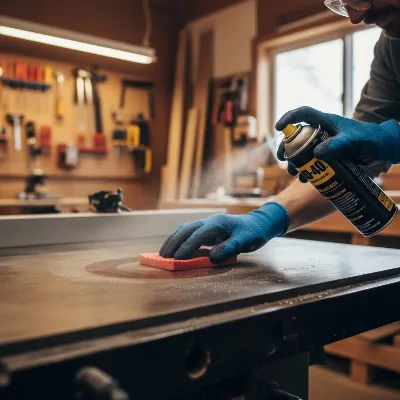 Woodworker cleaning light rust from a table saw top with WD-40 and a Scotch-Brite pad, showing careful hand movements
Tackling Moderate Rust
Moderate rust requires a bit more effort and possibly stronger agents.
- Initial Removal: If there are loose flakes, gently brush them away with a stiff metal bristle brush.
- Apply Rust Remover:
- Vinegar/Oxalic Acid: Soak rags in white vinegar or a mixed oxalic acid solution and lay them over the rusted areas. Allow them to sit for 30 minutes to a few hours, re-wetting as needed.
- Rust Remover Gel: Apply a dedicated rust remover gel (e.g., Metal Rescue Gel) about ⅛ inch thick using a putty knife for an even coat. Cover the treated area with plastic wrap to prevent it from drying out, and let it work for 1-2 hours (or as per product instructions).
- Scrub and Sand: After the soaking period, remove the rags or plastic wrap. Use medium-grit wet/dry sandpaper (220-320 grit) with WD-40 as a lubricant, or a fresh Scotch-Brite pad, to scrub away the loosened rust. For larger flat areas, you can attach sandpaper to a flat block or use an orbital sander with light pressure.
- Repeat if Necessary: For stubborn spots, reapply the rust remover and repeat the scrubbing process.
- Neutralize and Clean: Thoroughly wipe down the surface with water if you used an acid (like vinegar or oxalic acid), then dry completely. For gel removers, ensure all gel is removed. Finally, clean with mineral spirits or denatured alcohol to remove any remaining residue and prepare the surface for protection.
Addressing Heavy Rust and Pitting
Heavy rust with significant pitting is the most challenging and requires the most careful approach to avoid damaging the table’s flatness.
- Aggressive Initial Cleaning: Use a stiff metal brush to remove as much loose, flaky rust as possible. Be cautious not to scratch the underlying good metal.
- Stronger Chemical Treatment: Naval Jelly (phosphoric acid) is often recommended for severe rust. Apply a thick layer, ensuring proper ventilation and wearing full PPE. Allow it to sit for 5-10 minutes, then wipe away the rust and jelly. Reapply to pitted areas and work it in with a rag or fine metal brush.
- Alternatively, for less aggressive chemical action, Evapo-Rust can be very effective for heavy rust, often requiring longer soak times but being safer on the base metal.
- Gradual Abrasive Work: If necessary, start with 150-grit wet/dry sandpaper with WD-40 as a lubricant, but only for the most stubborn, deeply rusted areas, moving to 220, 320, and then 400-grit once the heavy rust is broken down. Always sand evenly across the surface and avoid focusing too much on one spot to prevent creating depressions.
- Thorough Rinse and Dry: After using Naval Jelly or other acidic removers, it is crucial to rinse the surface thoroughly with water to neutralize the acid, then dry it immediately and completely to prevent flash rust.
- Solvent Clean: Wipe the entire surface with mineral spirits or denatured alcohol to remove any last traces of chemicals and prepare for waxing.
“When dealing with heavy rust on cast iron, patience is your best tool. Rushing with aggressive abrasives can do more harm than good, permanently compromising the precision of your machine.” – Admin, ReviewsArray.com, Table Saw Specialist
Neutralizing and Cleaning Up
This is a critical step to ensure no residual chemicals are left that could cause future rust or interfere with protective coatings.
- Remove All Residue: Whether you used acidic removers, gels, or just WD-40 and sandpaper, you must remove all cleaning agents and rust particles.
- Solvent Wipe: Generously apply mineral spirits, denatured alcohol, or a specific wax and polish remover to a clean rag and wipe down the entire table saw top. Repeat with fresh rags until no discoloration or residue appears on the cloth. This degreases the surface and ensures it’s perfectly clean and dry for the next step.
Protecting Your Table Saw Top from Future Rust
Once your table saw top is meticulously clean and smooth, the final and most crucial step is to protect it from future rust. Prevention is always easier than removal.
Methods for Rust Prevention:
- Paste Wax: This is the most popular and highly recommended method for cast iron tops. Apply a thin, even coat of silicone-free paste wax (such as Johnson’s Paste Wax or a pure carnauba wax) with a clean rag. Allow it to haze over for 10-20 minutes, then buff it off with another clean, soft cloth until the surface is slick and shiny. The wax creates a barrier against moisture and also reduces friction for smoother cuts.
- Boeshield T-9: This product is an excellent rust preventative, initially developed by Boeing. It penetrates, displaces moisture, and leaves a waxy film. Apply it, let it sit overnight, then buff off any stickiness. Some users follow this with a layer of paste wax for added lubricity.
- Dry Lubricants (e.g., Bostik GlideCote): These sprays create a slippery, dry film that resists rust and reduces friction without leaving a greasy residue. Simply spray on and let dry.
Regular Maintenance Routine:
- Wipe Down After Each Use: Clear all sawdust and debris immediately after using your saw. Sawdust can absorb moisture and promote rust.
- Reapply Protection Regularly: Depending on your shop’s humidity and saw usage, reapply paste wax or your chosen protectant every few weeks to a few months. In high-humidity environments, monthly application might be necessary.
- Cover Your Saw: When not in use, cover your table saw with a good quality dust cover. This provides a physical barrier against dust and helps reduce exposure to ambient moisture.
- Humidity Control: If possible, maintain a consistent, low humidity level in your workshop using a dehumidifier, especially if you live in a humid climate.
By integrating these protective measures and a diligent maintenance routine, you can significantly extend the life of your table saw top and keep it in pristine, rust-free condition.
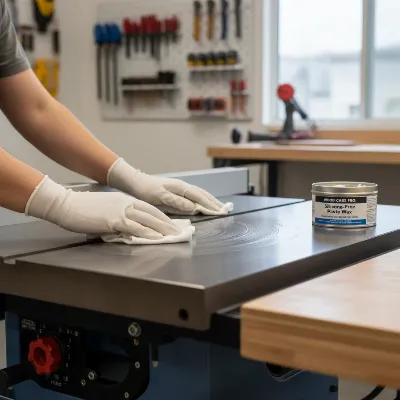 Woodworker applying silicone-free paste wax to a clean table saw top for rust prevention and smooth operation
Common Mistakes to Avoid During Rust Removal
While restoring a rusty table saw top is a rewarding DIY task, several common pitfalls can inadvertently cause more harm than good. Being aware of these mistakes will save you time, effort, and potential damage to your valuable tool.
- Using Overly Aggressive Abrasives: Reaching for a coarse-grit sandpaper (like 80 or 100 grit) or a heavy-duty wire brush might seem like a quick fix for severe rust. However, cast iron is surprisingly soft, and such aggressive methods can easily gouge the surface, compromising its flatness. These scratches create new pockets where moisture can collect, leading to future rust that is even harder to manage. Always start with the finest abrasive possible and only increase grit if absolutely necessary.
- Not Neutralizing Acids: If you use acidic rust removers like Naval Jelly or oxalic acid, failing to thoroughly rinse and neutralize the surface with water (and then a solvent) can leave behind an acidic residue. This residue will continue to etch the metal and can cause “flash rust” almost immediately after drying, effectively undoing your hard work.
- Ignoring Safety Gear: The chemicals and rust particles involved in cleaning can be hazardous. Skipping safety glasses can lead to eye irritation or injury from splashes or flying debris. Neglecting chemical-resistant gloves can cause skin irritation or chemical burns. Without a respirator, you risk inhaling fine rust dust or chemical fumes, which can be detrimental to your respiratory health. Always prioritize your PPE.
- Not Protecting Other Saw Components: During the cleaning process, rust particles and chemical solutions can spread to other parts of your table saw, such as the motor, electrical components, or precise adjustment mechanisms. Before you start, remove everything detachable and cover sensitive areas with plastic sheeting or painter’s tape to prevent unintended damage.
- Over-relying on WD-40 for Protection: While WD-40 is excellent for displacing moisture and aiding in initial rust removal, it is not a long-term rust preventative. It can evaporate quickly and, according to some experts, may even attract dust and moisture over time, potentially accelerating future corrosion. Always follow WD-40 cleaning with a dedicated rust preventative like paste wax or a dry lubricant for lasting protection.
- Uneven Sanding: When sanding, especially with an orbital sander, applying too much pressure in one spot or not moving the sander evenly can create depressions in the table’s surface. This unevenness will affect the accuracy of your cuts. Use light, consistent pressure and overlapping passes across the entire table.
By avoiding these common mistakes, you can ensure that your rust removal process is not only effective but also safe and beneficial for the longevity and performance of your table saw.
Conclusion
A clean, rust-free table saw top is fundamental to precise woodworking and the longevity of your equipment. While rust can seem like an inevitable adversary for cast iron, armed with the right knowledge and tools, you can effectively tackle it at home. From gently scrubbing away light surface corrosion with WD-40 and fine abrasives to carefully employing stronger chemical removers for more stubborn patches, the key lies in patience, thoroughness, and prioritizing safety. Remember, protecting your saw with a silicone-free paste wax and maintaining a clean, dry environment are your best defenses against future rust.
By diligently following these steps and incorporating a routine of cleaning and protection, your table saw will not only look better but also perform at its peak, providing you with smooth, accurate cuts for many years to come. What is your go-to method for keeping your table saw top rust-free in challenging conditions?
Frequently Asked Questions
How often should I clean my table saw top to prevent rust?
The frequency depends on your workshop environment and usage. In humid climates or with frequent use, a quick wipe-down and reapplication of wax every few weeks might be necessary. In drier conditions or with less use, every few months could suffice. Regularly inspect your saw for any signs of rust.
Can I use household bleach to remove rust from my table saw?
No, it is strongly advised not to use household bleach (sodium hypochlorite) for rust removal on cast iron. Bleach can cause further corrosion and discoloration, and it can be difficult to neutralize completely, potentially leading to more damage over time. Stick to proven rust removers like vinegar, oxalic acid, or specialized rust-dissolving gels.
Frequently Asked Questions
How often should I clean my table saw top to prevent rust?
The frequency of cleaning depends on your workshop's humidity and saw usage. In humid climates or with frequent use, a quick wipe-down and reapplication of wax every few weeks is necessary. In drier conditions or with less use, every few months may suffice. Always inspect your saw regularly for any signs of rust.
Can I use household bleach to remove rust from my table saw?
No, it is strongly advised not to use household bleach (sodium hypochlorite) for rust removal on cast iron. Bleach can cause further corrosion and discoloration, and it is difficult to neutralize completely, potentially leading to more damage over time. Stick to proven rust removers like vinegar, oxalic acid, or specialized rust-dissolving gels.
What are the best rust removal agents for a table saw?
For light rust, WD-40 is effective. For moderate rust, white vinegar or oxalic acid solutions work well. For heavy rust, Naval Jelly (phosphoric acid) or dedicated rust removers like Evapo-Rust are recommended. Always choose an agent appropriate for the rust severity.
Why is a smooth table saw surface important for woodworking?
A smooth, clean table saw surface is paramount for wood to glide effortlessly, ensuring consistent and precise results. A rough or corroded surface increases friction, which can lead to inconsistent cuts, inaccurate measurements, and dangerous kickback situations as wood snags on uneven areas.
What safety precautions should I take when removing rust?
When removing rust, always disconnect power from the saw and clear your workspace. Wear personal protective equipment (PPE) including safety glasses, chemical-resistant gloves, and a respirator or dust mask to protect against rust particles, chemical splashes, and fumes. Protect nearby surfaces with plastic sheeting if using strong chemicals.
Safely Restore Your Rusty Table Saw Top
Restore your table saw top to optimal condition by following these steps for rust removal and prevention, ensuring precision and longevity.
Disconnect power from your table saw and clear the workspace by removing the blade and accessories. Wear safety glasses, chemical-resistant gloves, and a respirator to protect yourself from rust particles and chemicals. Cover nearby sensitive surfaces with plastic sheeting.
Examine the table saw top to determine if the rust is light, moderate, or heavy. For light rust, apply WD-40; for moderate, use white vinegar or oxalic acid; for heavy rust, use Naval Jelly or a dedicated rust remover gel. Allow the remover to penetrate for the recommended time.
After the rust remover has worked, use appropriate abrasives. For light rust, a Scotch-Brite pad or fine steel wool is sufficient. For moderate to heavy rust, use wet/dry sandpaper (220-320 grit, or finer for heavy rust) with WD-40 as a lubricant, applying light, even pressure.
If using acidic removers, rinse the surface thoroughly with water to neutralize the acid, then dry immediately. Wipe the entire surface with mineral spirits or denatured alcohol to remove all chemical residues, oils, and rust particles, ensuring it is perfectly clean and dry.
Apply a thin, even coat of silicone-free paste wax (like Johnson's Paste Wax) or Boeshield T-9 to the clean, dry table saw top. Allow it to haze, then buff it off with a clean, soft cloth until the surface is slick and shiny. Reapply regularly and cover the saw when not in use.
