A table saw is an indispensable tool in any workshop, allowing for precise and efficient cuts. However, encountering a stuck blade height adjustment wheel can bring your projects to a grinding halt. This common issue, often frustrating, is usually a straightforward fix for the determined DIY enthusiast. Understanding the intricate mechanics behind your table saw’s height adjustment and knowing the right steps can save you time, money, and the headache of a stalled project. This comprehensive guide will walk you through diagnosing the problem, performing step-by-step repairs, and implementing preventative maintenance, ensuring your table saw operates smoothly and safely for years to come.
Understanding Your Table Saw’s Blade Height Mechanism
The core of your table saw’s blade height adjustment lies in a sophisticated system designed for precision. Typically, this mechanism involves a handwheel connected to a shaft, which in turn engages with a worm gear. This worm gear then meshes with another gear or a threaded rod, which is part of the trunnion assembly that supports the motor and blade. As you turn the handwheel, the gears meticulously raise or lower the entire blade assembly, allowing you to achieve the exact cutting depth required for your material.
Key components in this system include the handwheel itself, the connecting shaft, the worm gear, the trunnions, and often a locking mechanism to secure the blade at the desired height. Some saws might also feature pins or set screws that ensure the handwheel stays firmly engaged with the internal mechanism. The smooth operation of this entire system is critical for both cutting accuracy and user safety.
Essential Safety Precautions Before You Start
Before attempting any maintenance or repair on your table saw, prioritizing safety is paramount. Working with power tools, even when they are unplugged, demands a cautious approach to prevent accidents or injuries. Never underestimate the potential hazards associated with sharp blades and mechanical components.
First and foremost, always disconnect your table saw from its power source by unplugging it from the wall outlet. This crucial step eliminates any risk of accidental startup while your hands are near the blade or internal components. Secondly, equip yourself with appropriate personal protective equipment, including safety glasses to shield your eyes from debris, and work gloves to protect your hands from sharp edges or rust. Lastly, ensure your workspace is clear of clutter, providing ample room to work comfortably and safely around the saw. A well-lit area will also help you identify any issues more easily.
Diagnosing the Cause of a Stuck Height Wheel
Pinpointing why your table saw’s blade height wheel is stuck is the first critical step toward a successful repair. Various factors can impede the smooth operation of this mechanism, ranging from simple blockages to more complex component wear. A thorough diagnosis will guide you to the most effective solution.
Identifying Debris and Sawdust Buildup
|
Our Picks for the Best Table Saw in 2026
As an Amazon Associate I earn from qualifying purchases.
|
||
| Num | Product | Action |
|---|---|---|
| 1 | Lapidary Rock Saw for Cutting Rocks, 750W Mini Lapidary Equipment for Jewelry and Gemstone Polishing, 110V Table Saw Grinder Machine with Polishing Kit for Jade Agate Wood and Beeswax |

|
| 2 | Skil 3550-02 7-Inch Wet Tile Saw with HydroLock Water Containment System |
|
| 3 | 4" 60W MINI ELECTRIC TABLE SAW BENCH TOP GREAT ELECTRIC HOBBY CRAFT TABLE SAW DIY Power Tool Work Bench Stand Circular 2 PIECES Blades |
|
| 4 | VEVOR Band Saw, 9-Inch, Woodworking Benchtop Bandsaw with 1/2 HP Motor, 3.5-Inch Max Cutting Height, 11.8 x 11.8 in Cast Aluminum Table, 0-45° Tilting Range, with Miter Gauge, Fence, for Woodworking |
|
| 5 | SKIL 3601-02 Flooring Saw with 36T Contractor Blade, Red and black |
|
| 6 | POWERTEC Portable Small Workbench with Vise, Imprinted Ruler and Protractor Scale, Folding Sawhorse/Worktable and 4 Bench Dogs for Woodworking Projects (MT4006V) |
|
| 7 | SKIL 7-Inch Wet Tile Saw - 3540-02 |
|
| 8 | PROXXON Table Saw FET for Precision Cuts in Wood, Non-Ferrous Metals, Plastics - Adjustable Blade, Extendable Table, Low Noise Motor, 110-120V AC - 37070 |
|
| 9 | Woodworking table saw, can be installed in the operating table, 25kg saw blade can be adjusted up and down 55X36X40 cm |
|
| 10 | POWERTEC Push Block and Push Stick Set Fits Table Saws, Router Tables, Band Saws & Jointers, Dual Ergonomic Handles w/Max Grip, Wood Pusher Reduces Kickback & Increases Safety. 5PK (71009V) |
|
One of the most common culprits behind a stuck height wheel is the accumulation of sawdust, woodchips, and resin. Over time, fine dust can pack tightly into the gears, around the threaded rod, and within the trunnion assembly, creating significant friction and hindering movement. This buildup acts like a binding agent, making it incredibly difficult to turn the adjustment wheel. Visually inspect the underside of your saw, particularly around the gears and lead screw, for any visible signs of packed debris.
Checking for Rust and Corrosion
If your table saw is stored in a humid environment or has been exposed to moisture, rust and corrosion can easily develop on metal components. Rust can pit and bind moving parts, especially on shafts, gears, and threaded rods, making them seize up. Look for any reddish-brown discoloration on the metal surfaces of the adjustment mechanism. Rust often requires more than just cleaning and can necessitate specific treatments to free the seized parts.
Inspecting for Misalignment or Worn Parts
Beyond debris and rust, mechanical issues can also cause the height adjustment to stick. Misalignment of the trunnions, which support the blade assembly, can create binding points as the system tries to move vertically. Additionally, repeated use can lead to worn out gear teeth, damaged threaded rods, or deteriorated bushings. Inspect the gears for chipped or worn teeth and check if the threaded rod appears stripped or bent. Look for any unusual play or looseness in the mechanism, which might indicate worn bearings or bushings.
Assessing for Loose or Broken Components
Sometimes, the issue isn’t friction or damage to the main moving parts but rather a problem with smaller, connecting components. A loose or missing set screw that secures a gear to its shaft can cause the handwheel to spin without engaging the lifting mechanism. Similarly, a broken locking pin or a malfunctioning lock knob could be preventing the system from moving freely, or from staying in place once adjusted. Carefully examine all fasteners, pins, and locking mechanisms to ensure they are intact and properly tightened.
Step-by-Step Guide to Unjamming Your Table Saw Height Wheel
Once you’ve diagnosed the likely cause, you can proceed with a systematic approach to unjam your table saw’s blade height wheel. This process typically involves accessing the mechanism, thorough cleaning, appropriate lubrication, and gentle manipulation.
Gaining Access to the Mechanism
To begin, you’ll need to expose the height adjustment components. This usually involves removing the throat plate from the table saw top and, in many cases, tilting the saw on its side or back to access the underside where the gears and trunnions are located. For some models, you might also need to remove a motor cover or other protective shrouds. Always consult your saw’s owner’s manual for specific instructions on how to safely access these internal parts without causing damage.
Thorough Cleaning of Gears and Shafts
With the mechanism exposed, the next crucial step is to meticulously clean away any accumulated sawdust, resin, or other debris. Start by using a stiff brush, like an old toothbrush, to dislodge packed-in material from between gear teeth and along threaded rods. For stubborn grime or resin, a citrus-based cleaner can be very effective, as it helps dissolve sticky residues. Follow this with compressed air to blow away loose particles from all crevices. Ensure all surfaces are free from old, gunked-up grease that might be attracting more dust.
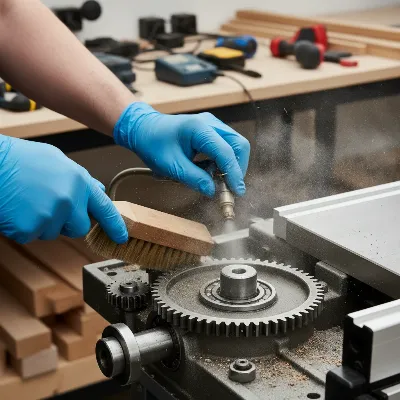 Technician cleaning table saw height adjustment gears with a brush and compressed air
Applying the Right Lubricant
Choosing the correct lubricant is vital for long-term smooth operation and to avoid attracting more dust. Avoid using wet grease or oil-based lubricants like traditional WD-40 (which is a penetrating oil, not a long-term lubricant), as these will attract and hold sawdust, creating new jams. Instead, opt for dry lubricants. Graphite powder, PTFE (Teflon) sprays, or silicone-free dry lubes are ideal. Apply these sparingly to the worm gear, threaded rods, trunnion pivot points, and any other sliding metal-on-metal surfaces. Bicycle chain dry lubes are also a popular choice among woodworkers. Paste wax can also be applied to larger metal surfaces to reduce friction and provide some rust protection.
Gentle Maneuvering and Force Application
After cleaning and lubricating, try to gently move the height adjustment wheel. If it’s still stiff, apply steady, gentle pressure, rocking the wheel back and forth. Avoid brute force, which could damage delicate components. Sometimes, applying penetrating oil (like WD-40) to stubborn, rusted areas and allowing it to soak for a while (15-30 minutes) can help loosen things up before you attempt to move it again. Work the wheel through its full range of motion several times to distribute the lubricant and free any remaining sticky spots.
Advanced Troubleshooting and Repairs
If the initial cleaning and lubrication don’t resolve the issue, you may be facing more entrenched problems that require advanced troubleshooting and potentially part replacement. These steps demand a bit more mechanical aptitude and patience.
Addressing Severely Rusted Components
For mechanisms severely seized by rust, a simple penetrating oil might not be enough. You might need to carefully disassemble the rusted components to thoroughly clean them. Use a rust remover chemical or a wire brush attachment on a drill to eliminate heavy rust. After cleaning, apply a rust-inhibiting primer or a dry, protective coating before reassembly to prevent future corrosion. Ensure all mating surfaces are smooth and free of pitting that could cause binding.
Realignment of Trunnions and Shafts
A misaligned trunnion assembly can cause significant binding that no amount of lubrication will fix. If you suspect misalignment, you’ll need to consult your saw’s manual for specific instructions on how to adjust the trunnions. This often involves loosening bolts that secure the trunnions to the saw cabinet, making small adjustments to square the blade to the table and ensure smooth vertical movement, then re-tightening. This can be a fiddly process, sometimes requiring a straight edge or specialized alignment tools to achieve precision.
> “Many frustrating table saw issues, especially with height and tilt, often boil down to accumulated debris or minor misalignment. A systematic approach to cleaning and inspection, followed by targeted lubrication, can resolve most problems without needing costly professional repairs.” – John Peterson, Master Woodworker and Tool Technician
Replacing Damaged or Worn Parts
In cases where gears are stripped, a threaded rod is bent beyond repair, or plastic components have worn down (as can happen with older or budget models), replacement of these parts becomes necessary. Identify the specific part number from your owner’s manual and source replacements from the manufacturer or a reputable aftermarket supplier. Replacing these components might involve more extensive disassembly of the saw’s internal chassis. Always ensure the replacement parts are compatible with your specific make and model.
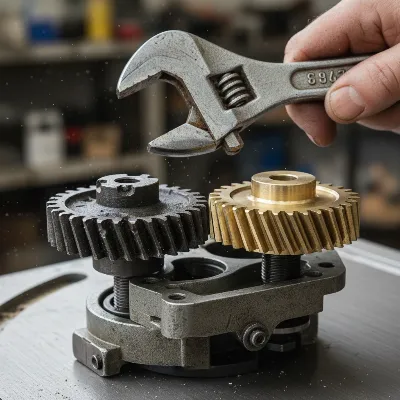 Close-up of a damaged table saw gear being replaced by a new one
Maintaining Your Table Saw to Prevent Future Jams
Preventing future jams is far easier than fixing them. Regular maintenance and proper care of your table saw’s height adjustment mechanism will ensure its longevity and reliable performance.
Regular Cleaning Routine
Incorporate a cleaning routine for your table saw after each significant use or at least once a month, depending on your usage frequency. Use an air compressor to blow out sawdust from underneath the saw, paying close attention to the blade height and tilt mechanisms. A vacuum cleaner with a hose attachment can also be effective in removing larger debris. Regularly wipe down the accessible parts of the adjustment system with a dry cloth or a cloth dampened with a mild cleaner to remove resin buildup before it hardens.
Choosing the Correct Lubricants
Stick to dry lubricants like graphite, PTFE (Teflon) sprays, or silicone-free options for the gears and threaded rods. These lubricants minimize the attraction of sawdust and prevent the formation of sticky gunk. Reapply these lubricants every few months or as needed, based on your saw’s usage. For pivot points or bushings that might experience higher friction, a very light application of paste wax can be beneficial, again being careful to avoid anything that will attract dust.
Proper Storage and Environmental Control
The environment in which your table saw is stored significantly impacts its condition. High humidity can lead to rust and corrosion, especially on exposed metal parts of the adjustment mechanism. If you live in a humid climate or your workshop isn’t temperature-controlled, consider using a dehumidifier. Covering your table saw with a breathable cover when not in use can also help protect it from dust and environmental moisture.
Conclusion
A stuck table saw blade height wheel can be a daunting problem, but with the right approach, it’s a manageable DIY repair. By understanding the mechanism, prioritizing safety, meticulously diagnosing the issue, and following systematic cleaning and lubrication steps, you can restore your saw to full functionality. Remember that regular maintenance, including routine cleaning and proper lubrication with dry products, is the best defense against future jams. Empower yourself with these tips, and keep your woodworking projects running smoothly. What other small repairs have you tackled on your power tools that made a big difference?
Frequently Asked Questions
Why does my table saw blade height adjustment wheel get stuck?
The height adjustment wheel typically gets stuck due to the accumulation of sawdust, resin, or rust on the gears, threaded rod, or trunnion assembly beneath the saw. Misalignment of components or worn parts can also contribute to the issue, making the mechanism difficult or impossible to turn.
Can I use WD-40 to lubricate my table saw’s height adjustment?
While WD-40 can act as a penetrating oil to temporarily loosen rusted or seized parts, it is not recommended as a long-term lubricant for table saw mechanisms. Its wet, oil-based formula attracts sawdust, which can quickly lead to more severe binding and jamming over time.
What is the best lubricant for table saw gears?
For table saw gears and height adjustment mechanisms, dry lubricants are highly recommended. Options include graphite powder, PTFE (Teflon) sprays, or silicone-free dry lubes. These create a slippery surface without attracting sawdust, ensuring smooth operation and preventing future clogs.
How often should I clean my table saw’s blade height mechanism?
The frequency of cleaning depends on your usage. For heavy users, cleaning after each major project or at least monthly is advisable. For occasional users, inspecting and cleaning every few months should suffice. Regular cleaning prevents debris buildup that leads to jams.
What should I do if the wheel still won’t turn after cleaning and lubricating?
If the wheel remains stuck, it might indicate a deeper mechanical issue such as severe rust, significant misalignment of the trunnions, or a damaged internal component like a stripped gear or bent rod. In such cases, further disassembly, rust removal, realignment, or part replacement may be necessary.
