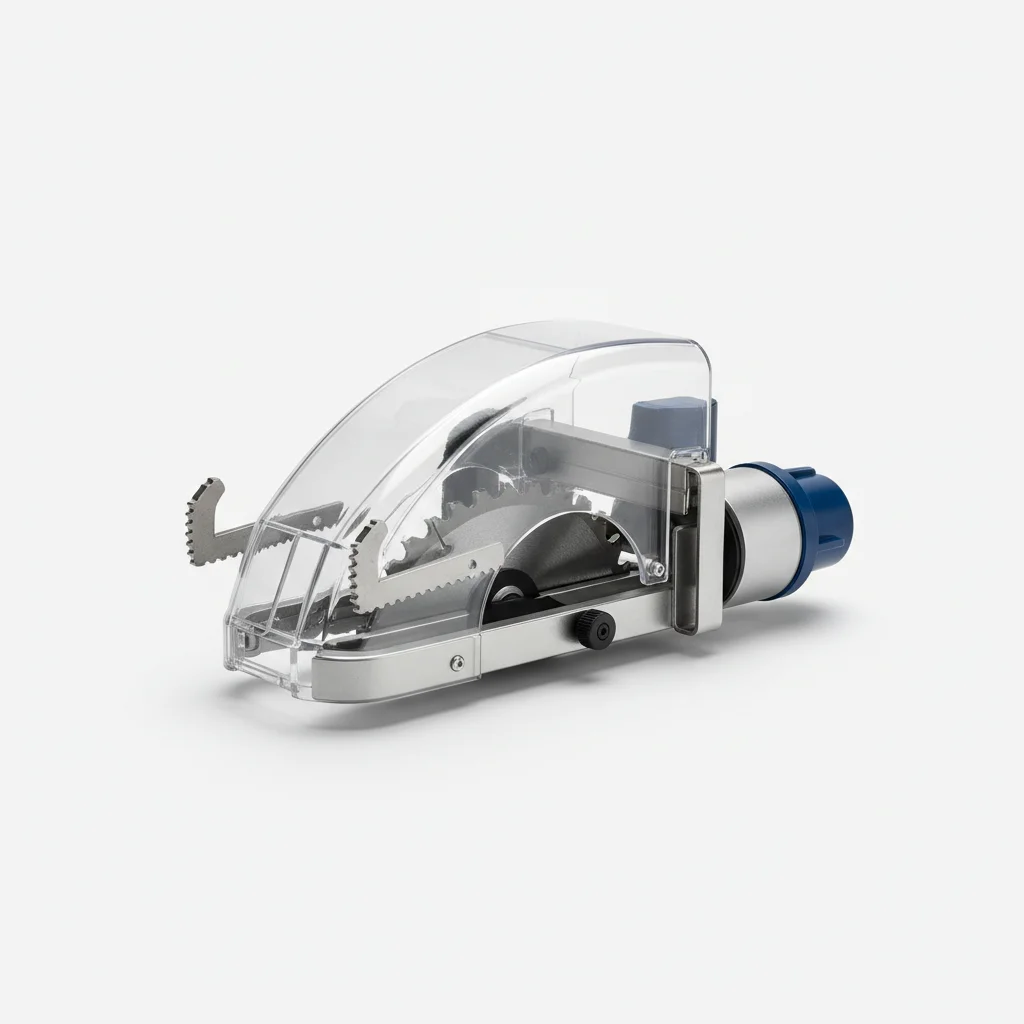
Table saw blade guards are indeed essential for safety, providing a critical barrier between the operator and the spinning blade. While some experienced woodworkers might be tempted to remove them for certain cuts, modern blade guards are designed to offer protection without significantly hindering functionality. They play a vital role in preventing accidental contact, reducing the risk of kickback, and containing sawdust and debris, making them a non-negotiable component for safe table saw operation.
Understanding the Primary Function of Blade Guards
The main purpose of a table saw blade guard is to prevent direct contact with the saw blade. This is achieved through a physical barrier, often made of clear plastic, that covers the top and sides of the blade. This guard moves with the wood as it’s fed through, ensuring continuous protection. Beyond preventing accidental touches, many guards also incorporate anti-kickback pawls, which are small, toothed devices designed to dig into the wood if it tries to move backward, effectively stopping kickback before it becomes dangerous. For browse all table saws articles on this site.
Another crucial function is dust collection. Many modern blade guards are equipped with ports that can be connected to a dust collection system. This not only improves visibility by keeping the cutting area clear but also contributes to a healthier workshop environment by capturing fine dust particles at their source.
Types of Table Saw Blade Guards and Their Features
There are several types of table saw blade guards, each with its own design and features. The most common is the overhead guard, which is typically mounted to the saw’s arbor or a separate arm and hovers above the blade. These often include anti-kickback pawls and a splitter, which is a thin piece of metal aligned with the blade to prevent the kerf from closing and pinching the blade.
Another type is the European-style guard, which is often more robust and offers greater dust collection capabilities. Some newer saws feature modular guarding systems that allow for quick changes between different types of guards or even the removal of specific components for specialized cuts, while still maintaining a level of safety. When considering an upgrade or replacement, always prioritize guards that offer comprehensive protection and are compatible with your specific saw model.
- Overhead Guards: Provide top and side protection, often with integrated anti-kickback pawls and splitters.
- Riving Knives: A critical safety component that moves with the blade, preventing kickback by keeping the kerf open.
- Dust Collection Ports: Many guards include ports for connecting to a dust extractor, improving air quality and visibility.
- Clear Visibility: Modern guards are typically made from clear materials to allow the operator to see the blade and workpiece.
- Quick-Release Mechanisms: Some advanced guards feature quick-release systems for easy installation and removal when necessary.
Installation and Maintenance of Blade Guards
|
Our Picks for the Best Table Saw in 2026
As an Amazon Associate I earn from qualifying purchases.
|
||
| Num | Product | Action |
|---|---|---|
| 1 | Lapidary Rock Saw for Cutting Rocks, 750W Mini Lapidary Equipment for Jewelry and Gemstone Polishing, 110V Table Saw Grinder Machine with Polishing Kit for Jade Agate Wood and Beeswax |

|
| 2 | PROXXON Table Saw FET for Precision Cuts in Wood, Non-Ferrous Metals, Plastics - Adjustable Blade, Extendable Table, Low Noise Motor, 110-120V AC - 37070 |
|
| 3 | VEVOR Band Saw, 9-Inch, Woodworking Benchtop Bandsaw with 1/2 HP Motor, 3.5-Inch Max Cutting Height, 11.8 x 11.8 in Cast Aluminum Table, 0-45° Tilting Range, with Miter Gauge, Fence, for Woodworking |
|
| 4 | SKIL 3601-02 Flooring Saw with 36T Contractor Blade, Red and black |
|
| 5 | Skil 3550-02 7-Inch Wet Tile Saw with HydroLock Water Containment System |
|
| 6 | POWERTEC Push Block and Push Stick Set Fits Table Saws, Router Tables, Band Saws & Jointers, Dual Ergonomic Handles w/Max Grip, Wood Pusher Reduces Kickback & Increases Safety. 5PK (71009V) |
|
| 7 | 4" 60W MINI ELECTRIC TABLE SAW BENCH TOP GREAT ELECTRIC HOBBY CRAFT TABLE SAW DIY Power Tool Work Bench Stand Circular 2 PIECES Blades |
|
| 8 | POWERTEC Portable Small Workbench with Vise, Imprinted Ruler and Protractor Scale, Folding Sawhorse/Worktable and 4 Bench Dogs for Woodworking Projects (MT4006V) |
|
| 9 | SKIL 7-Inch Wet Tile Saw - 3540-02 |
|
| 10 | Woodworking table saw, can be installed in the operating table, 25kg saw blade can be adjusted up and down 55X36X40 cm |
|
Proper installation of a table saw blade guard is paramount for its effectiveness. Always refer to your saw’s owner’s manual for specific instructions, as installation can vary between models. Ensure that the guard is securely attached and that all components, such as anti-kickback pawls and the splitter, are correctly aligned with the blade. A misaligned guard can be more dangerous than no guard at all, as it can interfere with the cut or even cause kickback.
Maintenance is also straightforward but important. Regularly clean the guard, especially if it’s made of clear plastic, to maintain visibility. Check for any cracks or damage, and ensure that all moving parts operate smoothly. If any part of the guard is damaged, it should be replaced immediately. Never operate your table saw with a damaged or improperly installed blade guard.
When to Consider Alternatives or Modifications (with Caution)
While blade guards are crucial, there are specific, rare situations where they might need to be temporarily removed or modified for certain operations, such as cutting dados or non-through cuts. In these instances, it is absolutely critical to implement alternative safety measures. This includes using a featherboard to hold the workpiece firmly against the fence, employing push sticks and blocks, and maintaining a heightened level of awareness. Always remember that removing a guard significantly increases the risk of injury, and it should only be done by experienced operators who fully understand the associated dangers and compensatory safety protocols.
The Role of Riving Knives in Enhanced Safety
A key component often integrated with or complementing blade guards is the riving knife. Unlike a splitter, which is stationary, a riving knife moves up and down with the blade, maintaining a constant distance from the blade’s teeth. This design is superior because it prevents the wood from pinching the blade even during height adjustments, significantly reducing the risk of kickback. Many modern table saws come equipped with a riving knife as a standard safety feature, and it’s a critical element to look for when purchasing a new saw or upgrading an older model. The combination of a robust blade guard and a well-adjusted riving knife offers the highest level of protection against common table saw hazards.

I appreciate the emphasis on safety, but I still find some modern blade guards a bit clunky for very precise work. While it’s good for preventing accidental contact, I sometimes remove mine for specific cuts where I need a clearer line of sight. I wish they were all designed to be a little less obtrusive without sacrificing protection.
I used to think blade guards were just a nuisance, especially for those tricky dado cuts. But after reading about how they reduce kickback, I decided to give my new saw’s guard a fair shot. It’s actually pretty well-designed and doesn’t get in the way as much as I expected. Definitely feel safer in the workshop now.
I’ve always been careful, but the point about containing sawdust and debris really hit home. My old saw made such a mess, and I never connected it to the guard’s function. My new saw has a much better clear plastic guard, and the dust collection is noticeably improved. It’s a small thing, but it makes a big difference in cleanup.
As someone who does a lot of DIY projects, safety is paramount. I’ve seen too many close calls. The explanation of how the guard moves with the wood as it’s fed through was really helpful in understanding its continuous protection. It’s a non-negotiable component for me, and I wouldn’t operate my table saw without it.