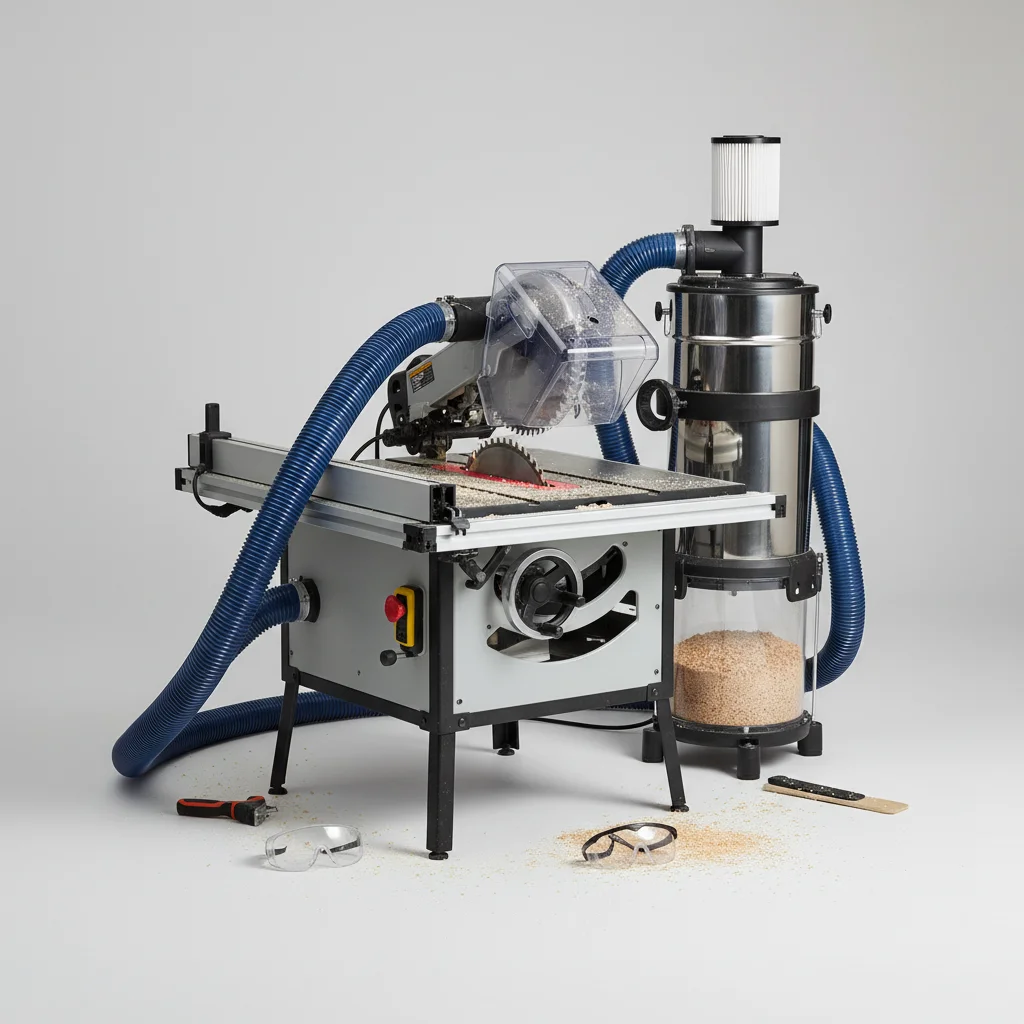
Effective table saw dust collection is crucial for maintaining a clean and safe workshop environment. There are three primary methods to manage sawdust: integrated dust ports, external dust collectors, and shop vacuums. Each method offers varying levels of efficiency and is suitable for different workshop sizes and budgets, ensuring you can significantly reduce airborne particles and surface debris.
Understanding Integrated Dust Ports
Most modern table saws come equipped with integrated dust ports, typically located at the blade guard and beneath the table. These ports are designed to capture sawdust at its source. The effectiveness of these ports largely depends on their design and the power of the connected collection system. For optimal performance, ensure the ports are clear of obstructions and that the hose connecting to your dust collector or shop vacuum is the correct diameter for a tight seal. Many manufacturers provide adapters to accommodate various hose sizes, which can be a simple upgrade for better collection. For complete table saws library on this site.
Choosing an External Dust Collector
For serious woodworkers, an external dust collector is an indispensable tool. These systems use powerful motors and large impellers to move high volumes of air, effectively capturing fine dust particles that can be harmful to your health and equipment. When selecting a dust collector, consider its CFM (cubic feet per minute) rating, filter type (HEPA filters are excellent for fine dust), and collection bag capacity. A 1.5 HP to 2 HP dust collector with a CFM rating of 1200-1500 is generally sufficient for a single table saw in a home workshop.
- Single-stage dust collectors are simpler and more affordable.
- Two-stage dust collectors separate chips from fine dust, extending filter life.
- Portable dust collectors offer flexibility for smaller spaces.
- Wall-mounted units save floor space.
- Cyclonic separators improve efficiency and reduce filter clogging.
Utilizing Shop Vacuums for Dust Control
|
Our Picks for the Best Table Saw in 2026
As an Amazon Associate I earn from qualifying purchases.
|
||
| Num | Product | Action |
|---|---|---|
| 1 | POWERTEC Portable Small Workbench with Vise, Imprinted Ruler and Protractor Scale, Folding Sawhorse/Worktable and 4 Bench Dogs for Woodworking Projects (MT4006V) |

|
| 2 | VEVOR Band Saw, 9-Inch, Woodworking Benchtop Bandsaw with 1/2 HP Motor, 3.5-Inch Max Cutting Height, 11.8 x 11.8 in Cast Aluminum Table, 0-45° Tilting Range, with Miter Gauge, Fence, for Woodworking |
|
| 3 | POWERTEC Push Block and Push Stick Set Fits Table Saws, Router Tables, Band Saws & Jointers, Dual Ergonomic Handles w/Max Grip, Wood Pusher Reduces Kickback & Increases Safety. 5PK (71009V) |
|
| 4 | Skil 3550-02 7-Inch Wet Tile Saw with HydroLock Water Containment System |
|
| 5 | Lapidary Rock Saw for Cutting Rocks, 750W Mini Lapidary Equipment for Jewelry and Gemstone Polishing, 110V Table Saw Grinder Machine with Polishing Kit for Jade Agate Wood and Beeswax |
|
| 6 | SKIL 7-Inch Wet Tile Saw - 3540-02 |
|
| 7 | 4" 60W MINI ELECTRIC TABLE SAW BENCH TOP GREAT ELECTRIC HOBBY CRAFT TABLE SAW DIY Power Tool Work Bench Stand Circular 2 PIECES Blades |
|
| 8 | PROXXON Table Saw FET for Precision Cuts in Wood, Non-Ferrous Metals, Plastics - Adjustable Blade, Extendable Table, Low Noise Motor, 110-120V AC - 37070 |
|
| 9 | SKIL 3601-02 Flooring Saw with 36T Contractor Blade, Red and black |
|
| 10 | Woodworking table saw, can be installed in the operating table, 25kg saw blade can be adjusted up and down 55X36X40 cm |
|
While not as powerful as dedicated dust collectors, a good shop vacuum can be a viable option for occasional table saw use or as a supplementary system. Look for shop vacuums with strong suction and a large capacity. Attaching a HEPA filter to your shop vacuum can significantly improve its ability to capture fine dust. For prolonged use, consider adding a cyclonic pre-separator between your table saw and the shop vacuum. This device captures most of the larger debris before it reaches the vacuum, preventing the filter from clogging quickly and maintaining consistent suction.
Optimizing Your Dust Collection Setup
Beyond the primary collection method, several practices can enhance your dust control. Regularly clean your table saw’s internal components, especially around the blade and motor, to prevent dust buildup that can impede performance and create fire hazards. Ensure all connections in your dust collection system are airtight to prevent leaks that reduce suction. Using blast gates on individual tool connections allows you to direct the full suction power to the tool in use, maximizing efficiency. Consider adding an ambient air filter to your workshop to capture any fine dust that escapes your primary collection system, further improving air quality.
Maintaining Your Dust Collection System
Proper maintenance is key to the longevity and effectiveness of your dust collection system. Regularly empty collection bags or bins before they become too full, as overfilling can reduce suction and strain the motor. Clean or replace filters according to the manufacturer’s recommendations; clogged filters drastically reduce efficiency. Inspect hoses and ducts for cracks, holes, or blockages that could compromise performance. A well-maintained system not only keeps your workshop cleaner but also protects your respiratory health and extends the life of your table saw.

Maintaining a clean and safe workshop environment is so important, and this really highlighted how much dust collection plays a role. I appreciate the breakdown of how integrated dust ports work and the importance of a good connection. My workshop feels much safer and healthier since I started paying more attention to my dust setup.
I’m still using a shop vacuum for my dust collection, and while it’s better than nothing, I can see why an external collector is recommended for efficiency. It does a decent job for smaller cuts, but when I’m ripping larger pieces, I still get a lot of dust escaping. I’m on a tight budget, so I’ll stick with it for now, but I’m definitely saving up for an upgrade.
I finally upgraded my old shop vac to a dedicated external dust collector after reading about the different methods. The difference in airborne particles is incredible! My small workshop used to be covered in a fine layer of dust after every project, but now it’s so much cleaner. It’s definitely worth the investment for anyone serious about woodworking.
I’ve always just relied on the integrated dust port on my table saw, but I never really thought about checking for obstructions. After reading this, I cleaned out the port and hose, and wow, what a difference! It’s capturing so much more sawdust now. My only minor complaint is that the hose connection can still be a bit fiddly to get just right.