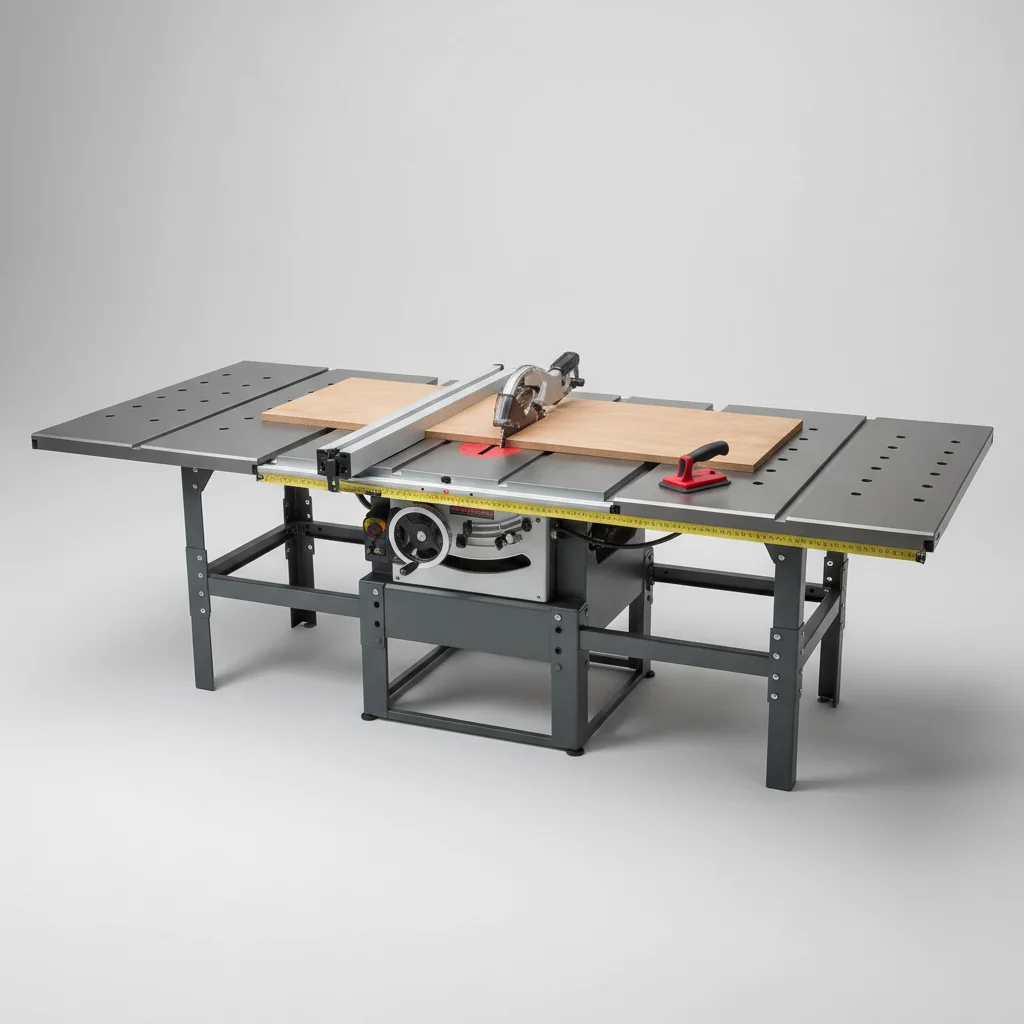
Table saw extension wings significantly enhance the cutting capacity of your saw, allowing you to handle wider materials with greater stability and precision. While not every woodworker needs them, they are particularly beneficial for those who frequently work with large sheet goods like plywood or MDF, or who require extensive outfeed support for long rips. These extensions provide crucial support that prevents material from tipping or binding, which can lead to inaccurate cuts and potential safety hazards. Understanding the different types and their installation can help you decide if they are a necessary upgrade for your workshop.
Types of Table Saw Extension Wings
Extension wings come in various materials and designs, each offering distinct advantages. Stamped steel wings are often found on entry-level and contractor saws, providing a basic level of support. They are lightweight and generally easy to install but may not offer the same rigidity as heavier options. Cast iron wings, on the other hand, are a premium choice, known for their exceptional flatness, vibration dampening properties, and durability. These are typically found on cabinet saws or as aftermarket upgrades for serious woodworkers. Phenolic or laminated MDF wings offer a good balance of cost and performance, providing a smooth, low-friction surface that is ideal for delicate materials. The choice often depends on your budget, the type of work you do, and the existing construction of your table saw. For complete table saws library on this site.
Installation and Alignment Considerations
Proper installation and alignment are critical for the effective use of table saw extension wings. Most wings attach to the main table with bolts, and it’s essential to ensure they are perfectly flush with the main table surface. Any misalignment can cause material to snag, leading to inaccurate cuts or even kickback. Use a straightedge and feeler gauges to check for flatness and ensure there are no gaps or steps between the main table and the extension. Some wings may require drilling new holes in your saw’s frame, so always consult your saw’s manual or the extension wing’s instructions. Once installed, periodically check the alignment, especially if you frequently move your saw or if it experiences heavy use.
Benefits for Large Material Handling
|
Our Picks for the Best Table Saw in 2026
As an Amazon Associate I earn from qualifying purchases.
|
||
| Num | Product | Action |
|---|---|---|
| 1 | SKIL 7-Inch Wet Tile Saw - 3540-02 |

|
| 2 | Woodworking table saw, can be installed in the operating table, 25kg saw blade can be adjusted up and down 55X36X40 cm |
|
| 3 | SKIL 3601-02 Flooring Saw with 36T Contractor Blade, Red and black |
|
| 4 | 4" 60W MINI ELECTRIC TABLE SAW BENCH TOP GREAT ELECTRIC HOBBY CRAFT TABLE SAW DIY Power Tool Work Bench Stand Circular 2 PIECES Blades |
|
| 5 | POWERTEC Push Block and Push Stick Set Fits Table Saws, Router Tables, Band Saws & Jointers, Dual Ergonomic Handles w/Max Grip, Wood Pusher Reduces Kickback & Increases Safety. 5PK (71009V) |
|
| 6 | PROXXON Table Saw FET for Precision Cuts in Wood, Non-Ferrous Metals, Plastics - Adjustable Blade, Extendable Table, Low Noise Motor, 110-120V AC - 37070 |
|
| 7 | Lapidary Rock Saw for Cutting Rocks, 750W Mini Lapidary Equipment for Jewelry and Gemstone Polishing, 110V Table Saw Grinder Machine with Polishing Kit for Jade Agate Wood and Beeswax |
|
| 8 | POWERTEC Portable Small Workbench with Vise, Imprinted Ruler and Protractor Scale, Folding Sawhorse/Worktable and 4 Bench Dogs for Woodworking Projects (MT4006V) |
|
| 9 | Skil 3550-02 7-Inch Wet Tile Saw with HydroLock Water Containment System |
|
| 10 | VEVOR Band Saw, 9-Inch, Woodworking Benchtop Bandsaw with 1/2 HP Motor, 3.5-Inch Max Cutting Height, 11.8 x 11.8 in Cast Aluminum Table, 0-45° Tilting Range, with Miter Gauge, Fence, for Woodworking |
|
The primary benefit of table saw extension wings is their ability to support large workpieces. Without them, cutting full sheets of plywood or long boards can be a precarious task, often requiring multiple people or makeshift supports. Extension wings provide a stable, continuous surface, making it easier to control the material throughout the cut. This not only improves accuracy but also significantly enhances safety by reducing the risk of the material shifting unexpectedly. For those who frequently build cabinets, bookshelves, or other large furniture pieces, the added support is invaluable, transforming a challenging operation into a manageable one.
Maximizing Your Table Saw’s Capacity
Beyond just wider cuts, extension wings can also improve the overall functionality of your table saw. They provide additional surface area for clamping jigs, setting up featherboards, or simply holding tools and accessories within easy reach. Some extension wings are designed to integrate with router tables, effectively creating a multi-functional workstation. This can be a significant space-saver in smaller workshops, allowing you to perform more operations on a single footprint. When considering an upgrade, look for wings that are compatible with your existing fence system and offer a robust, stable platform that can withstand the demands of your woodworking projects.
- Increased support for wide sheet goods.
- Improved accuracy for long rip cuts.
- Enhanced safety by preventing material tipping.
- Additional surface area for jigs and accessories.
- Potential for integrated router table functionality.
Choosing the Right Extension Wings
When selecting extension wings, consider the material, the size, and the compatibility with your current table saw. Measure the available space in your workshop and the typical dimensions of the materials you work with. For heavy-duty use, cast iron is often the preferred choice due to its mass and stability. For lighter work or budget constraints, stamped steel or phenolic options can be perfectly adequate. Always check reviews and manufacturer specifications to ensure the wings will integrate seamlessly with your specific table saw model. Investing in quality extension wings can significantly expand the capabilities of your table saw, making it a more versatile and safer tool for all your woodworking endeavors.

I got some aftermarket extension wings hoping to improve my outfeed support for longer rips. While they do provide more surface area, the installation was a bit of a pain to get perfectly level with my existing table. It took a lot of shimming and adjusting, which was frustrating. Once set up, they’re okay, but I wish the alignment was more straightforward.
As someone who frequently works with large sheet goods, I can’t imagine my workshop without proper extension wings. The article really hit the nail on the head about preventing material from binding – that’s a huge safety concern I used to have. Investing in a good set has made my workflow so much smoother and my cuts consistently precise. Highly recommend for anyone doing bigger projects.
I’ve been using the stamped steel wings that came with my contractor saw for a while now, and they’re decent for most of my DIY projects. They definitely help with longer rips, preventing the wood from tipping. My only minor complaint is that they can flex a tiny bit under really heavy pieces of MDF, but for the price point, they get the job done. Good for occasional use.
I finally pulled the trigger on some cast iron extension wings for my old Delta saw, and wow, what a difference! I’m constantly ripping down full sheets of plywood for cabinet projects, and the extra support has made those cuts so much safer and more accurate. No more struggling to keep the material flat, and the stability is incredible. Definitely a worthwhile upgrade if you’re serious about woodworking.