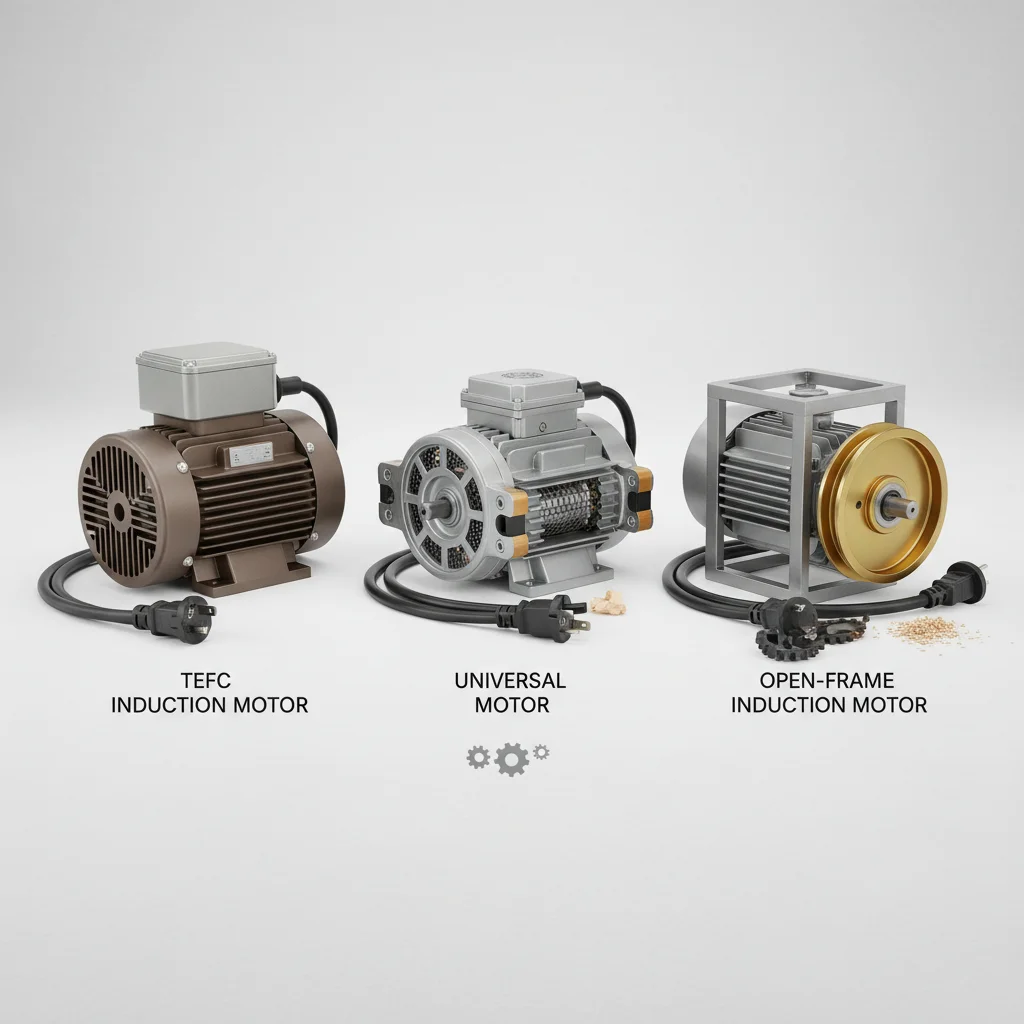
Understanding the different types of table saw motors and their power is crucial for selecting the right saw for your woodworking and DIY projects. There are primarily three types of motors found in table saws: universal, induction (belt-drive), and direct-drive induction motors. Each offers distinct advantages and disadvantages in terms of power, noise, and longevity, directly impacting the saw’s performance and suitability for various tasks.
Universal Motors: The Heart of Portable Saws
Universal motors are commonly found in portable and jobsite table saws. These motors are characterized by their high RPM and compact size, making them ideal for saws that need to be moved frequently. They typically operate on brushes and commutators, which require periodic replacement. While powerful for their size, universal motors tend to be louder and less durable than induction motors, and their high speed can sometimes lead to more aggressive cuts, requiring careful handling. For browse all table saws articles on this site.
Induction Motors: The Workhorse of Stationary Saws
Induction motors, particularly belt-drive versions, are the standard for cabinet and contractor table saws. These motors are known for their quiet operation, smooth power delivery, and exceptional durability. The belt-drive system helps to absorb vibrations and allows for a more efficient transfer of power to the blade. Induction motors are generally heavier and larger, making them less suitable for portable applications but perfect for stationary workshops where stability and continuous use are priorities. They are also typically more efficient, leading to lower operating costs over time.
Direct-Drive Induction Motors: A Hybrid Approach
Direct-drive induction motors offer a compromise between the portability of universal motors and the durability of belt-drive induction motors. In this configuration, the motor is directly connected to the blade arbor, eliminating the need for belts. This design reduces power loss and can be more compact than belt-drive systems, though it may not offer the same vibration dampening. These motors are often found in some contractor and hybrid table saws, providing a good balance of power and a relatively smaller footprint compared to traditional cabinet saws. They are generally quieter than universal motors but can still transmit more vibration than belt-drive systems.
Power Considerations: Amperage and Horsepower
|
Our Picks for the Best Table Saw in 2026
As an Amazon Associate I earn from qualifying purchases.
|
||
| Num | Product | Action |
|---|---|---|
| 1 | SKIL 7-Inch Wet Tile Saw - 3540-02 |

|
| 2 | POWERTEC Portable Small Workbench with Vise, Imprinted Ruler and Protractor Scale, Folding Sawhorse/Worktable and 4 Bench Dogs for Woodworking Projects (MT4006V) |
|
| 3 | POWERTEC Push Block and Push Stick Set Fits Table Saws, Router Tables, Band Saws & Jointers, Dual Ergonomic Handles w/Max Grip, Wood Pusher Reduces Kickback & Increases Safety. 5PK (71009V) |
|
| 4 | Lapidary Rock Saw for Cutting Rocks, 750W Mini Lapidary Equipment for Jewelry and Gemstone Polishing, 110V Table Saw Grinder Machine with Polishing Kit for Jade Agate Wood and Beeswax |
|
| 5 | Woodworking table saw, can be installed in the operating table, 25kg saw blade can be adjusted up and down 55X36X40 cm |
|
| 6 | 4" 60W MINI ELECTRIC TABLE SAW BENCH TOP GREAT ELECTRIC HOBBY CRAFT TABLE SAW DIY Power Tool Work Bench Stand Circular 2 PIECES Blades |
|
| 7 | PROXXON Table Saw FET for Precision Cuts in Wood, Non-Ferrous Metals, Plastics - Adjustable Blade, Extendable Table, Low Noise Motor, 110-120V AC - 37070 |
|
| 8 | SKIL 3601-02 Flooring Saw with 36T Contractor Blade, Red and black |
|
| 9 | VEVOR Band Saw, 9-Inch, Woodworking Benchtop Bandsaw with 1/2 HP Motor, 3.5-Inch Max Cutting Height, 11.8 x 11.8 in Cast Aluminum Table, 0-45° Tilting Range, with Miter Gauge, Fence, for Woodworking |
|
| 10 | Skil 3550-02 7-Inch Wet Tile Saw with HydroLock Water Containment System |
|
When evaluating table saw motors, two key specifications are amperage (amps) and horsepower (HP). Amperage indicates the electrical current the motor draws, while horsepower is a measure of its mechanical power output. For most DIY and home woodworking projects, a table saw with a 1.5 HP to 2 HP motor and an amperage rating of 13-15 amps is sufficient. Professional cabinet saws, however, often feature motors ranging from 3 HP to 5 HP, requiring higher amperage and sometimes a 240V power supply to handle dense hardwoods and continuous heavy use. Always match the motor’s power to the type and thickness of material you plan to cut regularly.
- 1.5 HP – 2 HP: Ideal for most home users, handling softwoods, plywood, and occasional hardwoods.
- 3 HP – 5 HP: Necessary for professional shops, cutting thick hardwoods, and continuous heavy-duty tasks.
- Amperage: Higher amps generally indicate more power, but also require a robust electrical circuit.
- Voltage: Be aware of 120V vs. 240V requirements for higher horsepower motors.
- Motor Enclosure: Totally Enclosed Fan Cooled (TEFC) motors offer better dust protection and longevity.
Choosing the Right Motor for Your Needs
The best table saw motor for you depends entirely on your specific needs and the type of work you’ll be doing. If portability and occasional light-duty work are your priorities, a saw with a universal motor might be suitable. For a dedicated home workshop where quiet operation, precision, and durability are paramount, an induction motor (especially belt-drive) is the superior choice. If you need a balance of power and a somewhat smaller footprint for a contractor-style saw, a direct-drive induction motor could be the answer. Always consider the long-term maintenance, noise levels, and the types of materials you’ll be cutting when making your decision.Investing in a saw with the appropriate motor type and power will ensure efficient and satisfying woodworking for years to come.

I’ve been using a direct-drive induction motor saw for a while now, and it’s incredibly reliable. The quiet operation is a huge plus in my small workshop, and I appreciate not having to worry about belt maintenance. It handles everything I throw at it, from plywood to thicker lumber, without bogging down.
I recently upgraded to a jobsite saw with a universal motor, and it’s been a game-changer for my on-site projects. The portability is fantastic, and it still has plenty of power for ripping through hardwoods. I was a bit worried about the noise, but it’s not nearly as bad as I expected, and the high RPM really helps with clean cuts.
After reading about the different motor types, I finally understood why my old portable saw was so loud! I just got a new cabinet saw with an induction motor, and the difference in noise and vibration is night and day. It’s so much more pleasant to work with, and the longevity factor gives me peace of mind for my bigger woodworking projects.
My old saw has an induction (belt-drive) motor, and while it’s powerful and pretty quiet, changing the belt every now and then is a bit of a hassle. I’m considering a new saw, and the idea of a direct-drive system without that maintenance is really appealing. Still, for the price I paid, it’s been a solid workhorse.