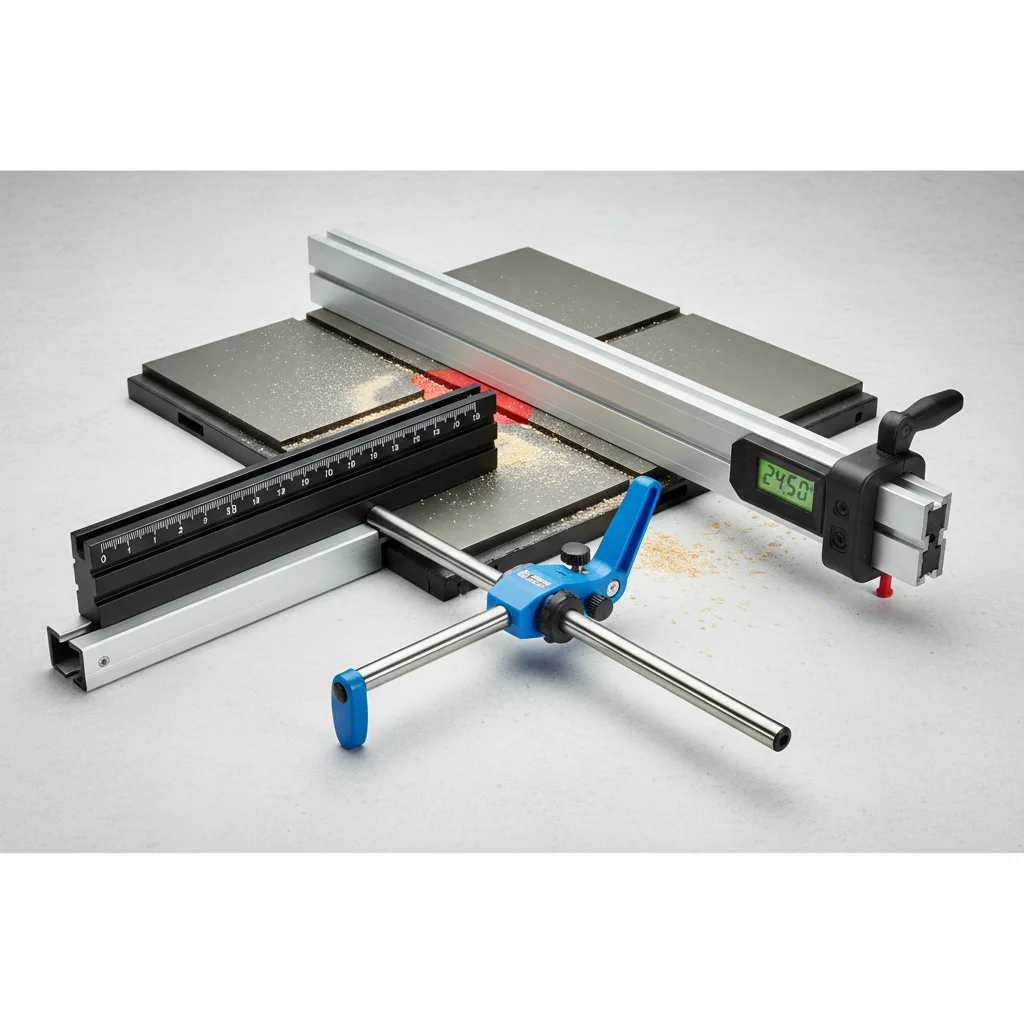
Choosing the right table saw rip fence is crucial for achieving precise and consistent cuts in your woodworking projects. There are primarily three types of rip fences available: T-square, cam-locking, and rack-and-pinion. Each offers distinct advantages and disadvantages in terms of accuracy, ease of use, and durability, with the T-square design generally considered the most reliable for consistent precision.
Understanding T-Square Rip Fences
T-square rip fences are the most common and widely respected type, known for their robust design and excellent accuracy. They attach to the front rail of the table saw and lock securely at both ends, preventing any deflection during a cut. This dual-point locking mechanism ensures the fence remains parallel to the blade, which is paramount for straight and accurate rips. Many professional woodworkers and serious hobbyists prefer this system due to its proven reliability and minimal flex.
The design typically features a heavy-duty steel or aluminum construction, often with a smooth, low-friction face that allows wood to glide easily. Calibration is straightforward, usually involving a tape measure and a few adjustments to ensure perfect parallelism. While they might take a moment longer to adjust than some other types, the resulting accuracy is well worth the effort for critical projects.
Exploring Cam-Locking Rip Fences
Cam-locking rip fences, often found on more entry-level or portable table saws, utilize a single-point locking mechanism, usually at the front of the saw table. This design prioritizes quick adjustments and portability. While convenient for rapid changes, the single locking point can sometimes lead to slight deflection or misalignment at the rear of the fence, especially when cutting longer or heavier workpieces. This can result in less accurate cuts if not carefully monitored.
Despite this potential drawback, cam-locking fences are perfectly adequate for many DIY tasks and lighter woodworking projects where absolute, hair-splitting precision isn’t the primary concern. They are generally lighter and less bulky, making them ideal for jobsite saws or small workshops where space is at a premium. Regular checks for parallelism are recommended to maintain acceptable accuracy.
Delving into Rack-and-Pinion Rip Fences
|
Our Picks for the Best Table Saw in 2026
As an Amazon Associate I earn from qualifying purchases.
|
||
| Num | Product | Action |
|---|---|---|
| 1 | VEVOR Band Saw, 9-Inch, Woodworking Benchtop Bandsaw with 1/2 HP Motor, 3.5-Inch Max Cutting Height, 11.8 x 11.8 in Cast Aluminum Table, 0-45° Tilting Range, with Miter Gauge, Fence, for Woodworking |

|
| 2 | POWERTEC Push Block and Push Stick Set Fits Table Saws, Router Tables, Band Saws & Jointers, Dual Ergonomic Handles w/Max Grip, Wood Pusher Reduces Kickback & Increases Safety. 5PK (71009V) |
|
| 3 | Skil 3550-02 7-Inch Wet Tile Saw with HydroLock Water Containment System |
|
| 4 | Lapidary Rock Saw for Cutting Rocks, 750W Mini Lapidary Equipment for Jewelry and Gemstone Polishing, 110V Table Saw Grinder Machine with Polishing Kit for Jade Agate Wood and Beeswax |
|
| 5 | POWERTEC Portable Small Workbench with Vise, Imprinted Ruler and Protractor Scale, Folding Sawhorse/Worktable and 4 Bench Dogs for Woodworking Projects (MT4006V) |
|
| 6 | PROXXON Table Saw FET for Precision Cuts in Wood, Non-Ferrous Metals, Plastics - Adjustable Blade, Extendable Table, Low Noise Motor, 110-120V AC - 37070 |
|
| 7 | Woodworking table saw, can be installed in the operating table, 25kg saw blade can be adjusted up and down 55X36X40 cm |
|
| 8 | SKIL 3601-02 Flooring Saw with 36T Contractor Blade, Red and black |
|
| 9 | 4" 60W MINI ELECTRIC TABLE SAW BENCH TOP GREAT ELECTRIC HOBBY CRAFT TABLE SAW DIY Power Tool Work Bench Stand Circular 2 PIECES Blades |
|
| 10 | SKIL 7-Inch Wet Tile Saw - 3540-02 |
|
Rack-and-pinion rip fences represent a more advanced and often premium option, particularly popular on high-end portable and jobsite table saws. This system uses a gear mechanism that moves the fence along a rack, ensuring it remains perfectly parallel to the blade at all times. The adjustment is incredibly smooth, precise, and often features a digital readout for exact measurements, eliminating the need for manual tape measure checks.
The inherent design of rack-and-pinion systems virtually eliminates fence deflection, providing exceptional accuracy and repeatability. This makes them an excellent choice for users who demand high precision and efficiency in their workflow. While typically more expensive, the investment often pays off in reduced setup time and consistently accurate results.
Key Considerations When Choosing a Rip Fence
When selecting a table saw rip fence, several factors should influence your decision beyond just the locking mechanism. The material and construction quality are vital for durability and stability. Look for fences made from robust materials like heavy-gauge steel or extruded aluminum that resist flexing and warping. The fence face should be smooth and flat to prevent marring your workpieces and ensure consistent contact.
Another important aspect is the ease of calibration and adjustment. A good fence system should allow for precise micro-adjustments to fine-tune its parallelism to the blade. Consider the scale and measurement system; clear, easy-to-read markings or a digital display can significantly improve workflow and accuracy. Finally, compatibility with your existing table saw is paramount; ensure any aftermarket fence system is designed to fit your specific saw model.
- Material Quality: Opt for heavy-gauge steel or extruded aluminum for maximum rigidity.
- Locking Mechanism: T-square for robust accuracy, cam-locking for speed, rack-and-pinion for ultimate precision.
- Calibration Ease: Look for clear scales and simple adjustment procedures.
- Fence Face: Ensure it’s smooth, flat, and non-marring.
- Compatibility: Verify it fits your specific table saw model.
Maintaining Your Rip Fence for Optimal Performance
Regardless of the type of rip fence you choose, proper maintenance is key to preserving its accuracy and longevity. Regularly clean the fence and the table saw rails to prevent sawdust and debris from interfering with its movement and locking mechanism. A build-up of dust can cause the fence to bind or not lock squarely, leading to inaccurate cuts. Use a dry brush or compressed air for this task.
Periodically check the fence for parallelism to the blade using a reliable measuring tool. Even the most accurate fences can shift slightly over time due to vibrations or heavy use. If you notice any misalignment, follow your saw’s manual for adjustment procedures. Lubricating the rails with a dry lubricant can also ensure smooth operation without attracting sawdust.
