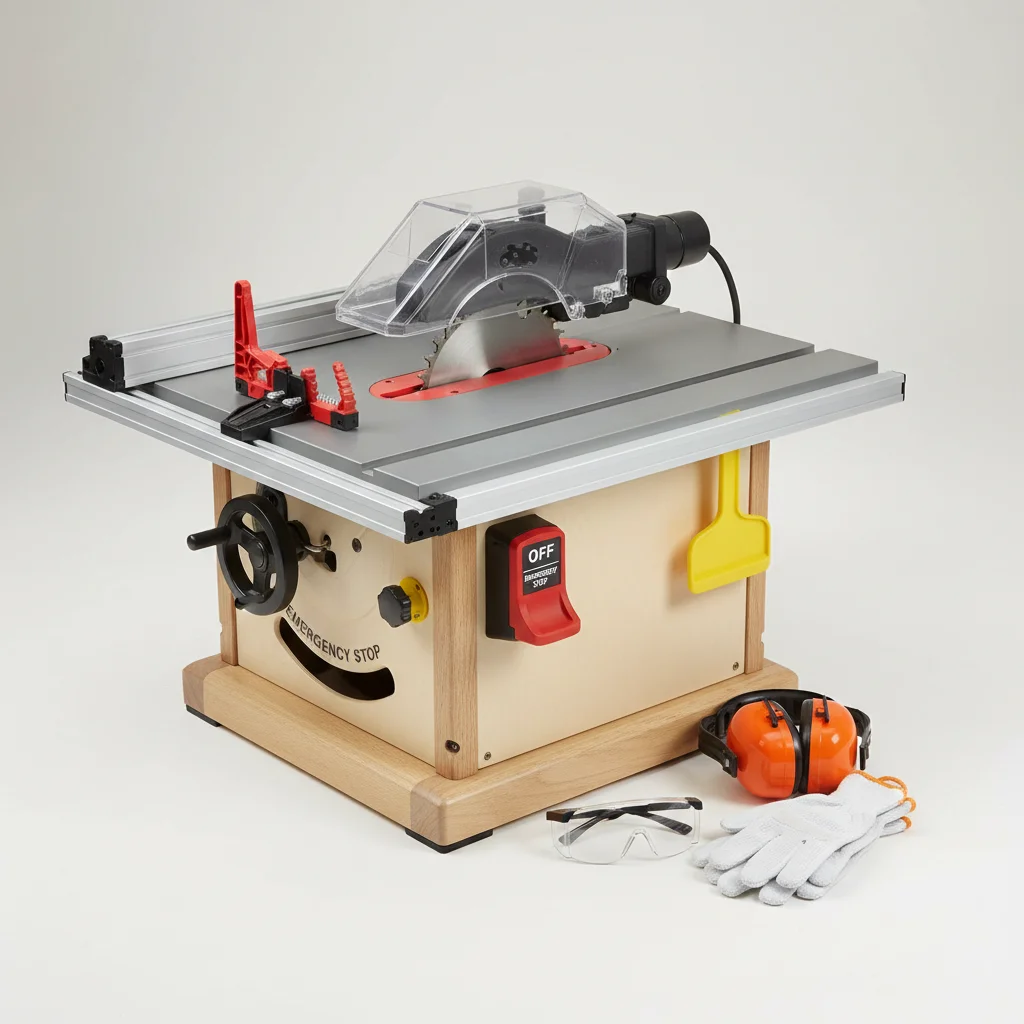
When purchasing a new table saw, prioritizing safety features is paramount to preventing accidents and ensuring a secure woodworking environment. There are at least five essential safety features every new buyer should look for to protect themselves from common hazards like kickback, blade contact, and flying debris. These features range from advanced blade guards to robust braking systems, all designed to make your workshop safer and your cuts more precise.
Understanding Blade Guard Systems
A comprehensive blade guard system is your first line of defense against accidental contact with the spinning blade. Modern table saws often come equipped with modular blade guards that include a splitter or riving knife, anti-kickback pawls, and an overhead guard. The riving knife, in particular, is crucial as it moves with the blade, preventing the kerf from closing and significantly reducing the risk of kickback. Look for systems that are easy to adjust and remove for specific operations, but always prioritize their use.
Some advanced models feature tool-free blade guard adjustments, making it more likely that users will keep them in place. Ensure the guard provides clear visibility of the cutting line while still offering maximum protection. A well-designed guard will also help in dust collection, directing sawdust away from the operator.
The Importance of a Riving Knife
The riving knife is arguably one of the most critical safety innovations in table saws. Unlike older splitters that were fixed, a riving knife rises and falls with the blade, staying within a few millimeters of the blade’s back edge. This prevents the wood from pinching the blade, which is a primary cause of kickback. When evaluating a new saw, confirm that it includes a properly sized and aligned riving knife. It should be slightly thinner than the blade’s kerf to prevent binding but thick enough to keep the wood open.
Without a riving knife, the risk of kickback dramatically increases, especially when making non-through cuts or working with warped lumber. Always ensure the riving knife is correctly installed and adjusted according to the manufacturer’s specifications before operating the saw.
Advanced Braking and Stop Systems
|
Our Picks for the Best Table Saw in 2026
As an Amazon Associate I earn from qualifying purchases.
|
||
| Num | Product | Action |
|---|---|---|
| 1 | POWERTEC Portable Small Workbench with Vise, Imprinted Ruler and Protractor Scale, Folding Sawhorse/Worktable and 4 Bench Dogs for Woodworking Projects (MT4006V) |

|
| 2 | PROXXON Table Saw FET for Precision Cuts in Wood, Non-Ferrous Metals, Plastics - Adjustable Blade, Extendable Table, Low Noise Motor, 110-120V AC - 37070 |
|
| 3 | SKIL 3601-02 Flooring Saw with 36T Contractor Blade, Red and black |
|
| 4 | VEVOR Band Saw, 9-Inch, Woodworking Benchtop Bandsaw with 1/2 HP Motor, 3.5-Inch Max Cutting Height, 11.8 x 11.8 in Cast Aluminum Table, 0-45° Tilting Range, with Miter Gauge, Fence, for Woodworking |
|
| 5 | Lapidary Rock Saw for Cutting Rocks, 750W Mini Lapidary Equipment for Jewelry and Gemstone Polishing, 110V Table Saw Grinder Machine with Polishing Kit for Jade Agate Wood and Beeswax |
|
| 6 | POWERTEC Push Block and Push Stick Set Fits Table Saws, Router Tables, Band Saws & Jointers, Dual Ergonomic Handles w/Max Grip, Wood Pusher Reduces Kickback & Increases Safety. 5PK (71009V) |
|
| 7 | 4" 60W MINI ELECTRIC TABLE SAW BENCH TOP GREAT ELECTRIC HOBBY CRAFT TABLE SAW DIY Power Tool Work Bench Stand Circular 2 PIECES Blades |
|
| 8 | SKIL 7-Inch Wet Tile Saw - 3540-02 |
|
| 9 | Skil 3550-02 7-Inch Wet Tile Saw with HydroLock Water Containment System |
|
| 10 | Woodworking table saw, can be installed in the operating table, 25kg saw blade can be adjusted up and down 55X36X40 cm |
|
Beyond physical guards, many modern table saws incorporate advanced braking systems that can stop the blade almost instantly. The most well-known of these is SawStop’s flesh-sensing technology, which detects contact with skin and stops the blade in milliseconds, retracting it below the table. While this technology comes at a higher price point, it offers an unparalleled level of protection against severe injuries.
Even without flesh-sensing technology, look for saws with quick-stop mechanisms or magnetic switches that prevent accidental restarts after a power outage. A large, easily accessible emergency stop button is also a vital feature, allowing you to shut down the machine quickly in an emergency. These systems add a layer of security that can be invaluable in a fast-paced workshop environment.
Anti-Kickback Pawls and Push Sticks
Anti-kickback pawls are serrated teeth that dig into the workpiece if it tries to move backward, effectively stopping kickback before it can occur. These are typically mounted on the blade guard assembly and work in conjunction with the riving knife. While they might seem like a minor detail, their role in preventing dangerous kickback events is significant. Always ensure they are sharp and free of debris to function correctly.
Furthermore, a dedicated push stick or push block is an indispensable safety accessory. It allows you to keep your hands a safe distance from the blade, especially when making narrow cuts or pushing the last part of a workpiece through. Many saws include a basic push stick, but investing in a high-quality, ergonomic push block can greatly enhance safety and control.
Dust Collection and Stability
While not directly preventing blade contact, effective dust collection and overall saw stability contribute significantly to a safer working environment. A good dust collection port, often 2.5 to 4 inches in diameter, helps keep the air clear of fine sawdust, which can be a respiratory hazard and obscure your view of the cut line. Look for saws with integrated dust shrouds around the blade for maximum efficiency.
- Ensure the saw has a robust, heavy base to prevent tipping or movement during operation.
- Check for easily adjustable and secure leveling feet for uneven workshop floors.
- Verify that the power switch is clearly marked and easily accessible for quick shutdowns.
- Consider models with integrated storage for safety accessories like push sticks and blade wrenches.
- Look for a clear and concise owner’s manual that details all safety procedures and features.
A stable saw reduces vibration, leading to more accurate cuts and less fatigue, which in turn reduces the likelihood of errors. Prioritizing these features ensures that your new table saw is not only powerful and precise but also exceptionally safe to operate for years to come.
