There’s nothing quite as frustrating as watching your perfectly milled lumber emerge from the table saw with unsightly burn marks. As an experienced technician who’s spent over a decade with these powerful machines, I know that burning wood isn’t just a cosmetic issue; it’s a clear signal that something isn’t quite right with your setup or technique. It can prematurely dull your blades, compromise the integrity of your cuts, and ultimately waste valuable material. But don’t worry, diagnosing and fixing this common problem is often simpler than you think. This guide will walk you through the core reasons your table saw might be burning wood and provide five quick, actionable fixes to get you back to making pristine, burn-free cuts, ensuring your projects look their best and your tools last longer.
Understanding Table Saw Wood Burn: Causes and Consequences
Wood burn on a table saw is essentially scorching that appears on the cut edge of your workpiece. It ranges from light discoloration to deep charring, creating a dark, hard surface that is difficult to sand away and often requires recutting. At its heart, wood burning is caused by excessive friction between the saw blade and the wood, generating enough heat to literally scorch the material.
This friction can stem from several factors. A dull blade struggles to slice through wood, instead rubbing and tearing, which builds heat. Similarly, a dirty blade coated with pitch and resin becomes less efficient, increasing resistance. If your saw’s alignment is off, particularly the rip fence not being perfectly parallel to the blade, the wood can get pinched, creating intense friction on one side of the blade. A feed rate that is too slow means the blade’s teeth dwell on the same wood fibers for too long, allowing heat to accumulate. Even seemingly minor details like an improperly set blade height or insufficient dust collection can contribute, as trapped sawdust can rub against the wood and blade, adding to the thermal buildup. The consequences extend beyond just aesthetics; excessive heat can quickly dull your carbide-tipped blades, shortening their lifespan and costing you more in replacements or sharpening services. More critically, binding caused by misalignment or slow feed rates can increase the risk of dangerous kickback, where the workpiece is violently ejected towards the operator. Addressing burn marks is crucial for both project quality and workshop safety.
The Top 5 Quick Fixes for Table Saw Wood Burn
Eliminating wood burn involves a systematic approach, often starting with the most common culprits. Here are five expert-recommended quick fixes that address the primary causes of scorching on your table saw.
Fix 1: Inspect, Clean, or Replace Your Saw Blade
|
Our Picks for the Best Table Saw in 2026
As an Amazon Associate I earn from qualifying purchases.
|
||
| Num | Product | Action |
|---|---|---|
| 1 | Skil 3550-02 7-Inch Wet Tile Saw with HydroLock Water Containment System |

|
| 2 | POWERTEC Push Block and Push Stick Set Fits Table Saws, Router Tables, Band Saws & Jointers, Dual Ergonomic Handles w/Max Grip, Wood Pusher Reduces Kickback & Increases Safety. 5PK (71009V) |
|
| 3 | SKIL 7-Inch Wet Tile Saw - 3540-02 |
|
| 4 | VEVOR Band Saw, 9-Inch, Woodworking Benchtop Bandsaw with 1/2 HP Motor, 3.5-Inch Max Cutting Height, 11.8 x 11.8 in Cast Aluminum Table, 0-45° Tilting Range, with Miter Gauge, Fence, for Woodworking |
|
| 5 | SKIL 3601-02 Flooring Saw with 36T Contractor Blade, Red and black |
|
| 6 | 4" 60W MINI ELECTRIC TABLE SAW BENCH TOP GREAT ELECTRIC HOBBY CRAFT TABLE SAW DIY Power Tool Work Bench Stand Circular 2 PIECES Blades |
|
| 7 | Woodworking table saw, can be installed in the operating table, 25kg saw blade can be adjusted up and down 55X36X40 cm |
|
| 8 | Lapidary Rock Saw for Cutting Rocks, 750W Mini Lapidary Equipment for Jewelry and Gemstone Polishing, 110V Table Saw Grinder Machine with Polishing Kit for Jade Agate Wood and Beeswax |
|
| 9 | POWERTEC Portable Small Workbench with Vise, Imprinted Ruler and Protractor Scale, Folding Sawhorse/Worktable and 4 Bench Dogs for Woodworking Projects (MT4006V) |
|
| 10 | PROXXON Table Saw FET for Precision Cuts in Wood, Non-Ferrous Metals, Plastics - Adjustable Blade, Extendable Table, Low Noise Motor, 110-120V AC - 37070 |
|
The condition and type of your saw blade are paramount in preventing wood burn. A dull blade is one of the most frequent offenders. When the teeth lose their sharpness, they can no longer cut cleanly through wood fibers; instead, they rub and generate friction, which rapidly converts into heat and burn marks. You can often recognize a dull blade by a noticeable increase in effort required to push the workpiece, accompanied by a burning smell and, of course, the scorch marks themselves. For blades that are simply dirty, a buildup of pitch, sap, and resin can dramatically reduce cutting efficiency, even if the teeth are still sharp. This gummy residue increases surface area contact and friction.
To fix this, begin by thoroughly cleaning your blade. There are specialized blade cleaning solutions available that effectively dissolve pitch and resin without damaging the carbide tips. Immerse the blade, scrub gently with a brush, and wipe it clean. If, after cleaning, the blade still produces burn marks, or if the teeth show visible wear, damage, or missing carbide, it’s time for a replacement or professional sharpening. Furthermore, ensure you’re using the correct blade for the task. A high tooth-count blade (e.g., 60-80 teeth) designed for crosscutting may burn when used for ripping thick stock, as it generates too much friction and struggles to clear chips efficiently. Conversely, a low tooth-count rip blade (e.g., 24-40 teeth) is designed to clear chips quickly and is ideal for ripping, minimizing heat buildup. Matching the blade to the application is a foundational step in preventing burn.
Fix 2: Perfect Your Fence Alignment
A misaligned rip fence is another leading cause of wood burn, particularly during rip cuts. If your fence is not perfectly parallel to the saw blade, it can cause the workpiece to pinch against the blade as you feed it through. This pinching action creates intense friction on one side of the blade, leading to immediate scorching and an increased risk of dangerous kickback. Achieving perfect alignment is critical for both cut quality and safety.
To check your fence alignment, unplug your saw and raise the blade fully. Using a reliable measuring tool like a dial indicator or a combination square, measure the distance from a specific tooth on the blade (ensure you mark the tooth for consistency) to the front of the rip fence. Then, carefully rotate the blade so the marked tooth is at the back of the table and measure the distance to the fence again. The measurements should be identical. If they differ, you’ll need to adjust your fence until it is perfectly parallel. Many high-quality table saws feature micro-adjustment mechanisms for precise fence alignment. Some experienced woodworkers even prefer a very slight “toe-out” on the fence, meaning the rear of the fence is a fraction of a millimeter (e.g., 0.001-0.002 inches) further from the blade than the front. This minimal taper can help prevent binding by allowing the wood to naturally relieve internal stresses after the cut, but absolute parallelism is generally recommended for most users.
Fix 3: Optimize Your Feed Rate and Cutting Technique
The speed at which you feed the workpiece into the blade, known as the feed rate, profoundly impacts whether burn marks appear. Feeding too slowly is a common mistake that allows the blade’s teeth to rub against the same wood fibers for an extended period, generating excessive heat and inevitably causing burn. Conversely, an inconsistent feed rate – pausing or slowing down significantly during a cut – also creates localized heat buildup where the blade dwells.
The key is to maintain a consistent, steady feed rate that matches the wood species, blade type, and the power of your saw. For most ripping operations, a moderately brisk and continuous push is ideal. Listen to your saw; if the motor sounds like it’s bogging down, you might be feeding too fast or the blade is dull. If you hear a high-pitched whine or smell burning, you’re likely feeding too slowly. Practice feeding the material through smoothly, without stopping or hesitation. Use push sticks or push blocks consistently, especially when completing a cut, to maintain even pressure and speed through the entire pass. With harder woods, you might need to adjust your feed rate slightly slower than with softwoods, but always aim for continuous motion. Remember, every pause is an invitation for burn marks to appear.
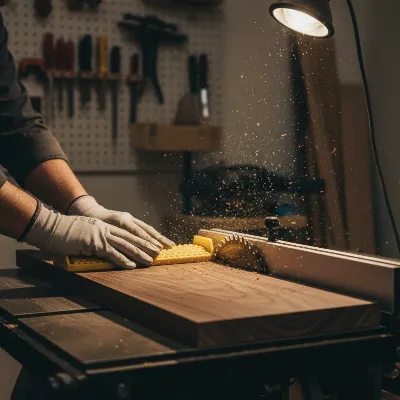 Optimizing table saw feed rate and cutting technique for clean, burn-free cuts.
Fix 4: Adjust Blade Height for Optimal Performance
The height of your table saw blade might seem like a minor detail, but it plays a significant role in preventing wood burn. Many beginners are taught to keep the blade just barely protruding above the workpiece for safety reasons, which is often counterproductive for cut quality and heat generation. When the blade is set too low, a larger portion of the blade is in contact with the wood for a longer duration during the cut. This increases friction and, consequently, heat buildup, leading to burn marks.
The optimal blade height for most cuts is when the gullets (the spaces between the teeth) are fully exposed above the workpiece. This means the highest point of the blade should be about one full tooth (or about 1/4 to 1/2 inch) above the top surface of the wood. At this height, the blade teeth enter and exit the wood at a more efficient angle, shearing off chips cleanly rather than rubbing. This configuration also allows the gullets to effectively clear sawdust from the cut, preventing it from accumulating and adding to friction. Furthermore, a higher blade exposure improves chip ejection, which is crucial for reducing heat. While it might seem counterintuitive, a slightly higher blade setting actually reduces the total contact time between the blade and the wood, resulting in cooler, cleaner cuts. Always adjust the blade height with the saw unplugged for safety.
Fix 5: Ensure Effective Dust Collection
Dust collection is often overlooked as a factor in preventing wood burn, yet it plays a crucial role. As your saw blade cuts, it generates a significant amount of sawdust and wood chips. If these waste materials are not efficiently removed from the blade and the cut path, they can become trapped between the blade, the workpiece, and the saw table. This trapped sawdust acts as an abrasive, dramatically increasing friction and heat, leading directly to burn marks. In essence, you’re not just cutting wood; you’re also grinding sawdust.
A robust dust collection system is essential. Ensure your table saw’s dust port is connected to a powerful dust collector or shop vacuum and that the collection bag or canister is not full. Regularly check the internal components of your saw, especially around the blade and arbor area, for any accumulated sawdust or pitch that might impede chip ejection. Cleaning these areas periodically will improve airflow and reduce the chances of material getting trapped. For best results, consider an over-arm dust collection system in addition to the standard under-table collection. This helps capture chips directly at the source, preventing them from being pushed back into the cut and causing friction. A clean saw and an effective dust extraction system will contribute significantly to cooler, cleaner, and burn-free cuts.
Beyond the Fixes: Preventative Measures for Pristine Woodworking
Once you’ve addressed the immediate causes of wood burn, implementing consistent preventative measures will ensure your cuts remain pristine project after project. Regular maintenance is your best defense. Establish a routine for cleaning your saw blades, ideally after every few hours of use or whenever you notice pitch buildup. Keeping blades sharp, either by professional sharpening or by replacing them when necessary, is a non-negotiable step for optimal performance.
Consider using specialized tools like sacrificial fences or sleds. These custom jigs provide excellent support for your workpiece and can sometimes be designed with zero-clearance inserts that minimize tear-out and help contain sawdust, further reducing friction. Proper stock support, especially for long or wide pieces, prevents the material from twisting or binding. Employ infeed and outfeed supports to ensure the workpiece travels smoothly and consistently through the blade. Understanding the properties of the wood you’re cutting is also vital. Different wood species have varying densities and internal stresses; some, like maple or cherry, are more prone to burning. Ensure your lumber has a stable moisture content, as improperly dried wood can release stresses during a cut, leading to binding and burning. Lastly, a splitter or a riving knife (which rises and falls with the blade) is an indispensable safety feature that also prevents the kerf from closing up and pinching the blade, significantly reducing burn marks and kickback risks.
“Many woodworkers overlook the subtle signs until burning is severe. Proactive blade cleaning and alignment checks are not just about aesthetics; they’re about extending tool life and, more importantly, ensuring safety in the shop.” – ReviewsArray.com Technician, Table Saw Specialist
Safety First: Working Smart with Your Table Saw
While troubleshooting burn marks, safety must always be your top priority. A table saw is a powerful and potentially dangerous tool if not handled with respect. Before performing any adjustments, blade changes, or cleaning, always unplug the saw from its power source. This critical step eliminates any chance of accidental startup.
Equip yourself with the appropriate personal protective equipment (PPE). Safety glasses are non-negotiable; wear them every time you operate or adjust the saw to protect against flying debris. Hearing protection, such as earmuffs or earplugs, is also highly recommended, as table saws can produce noise levels damaging to your hearing over time. When making cuts, maintain safe hand placement, keeping your hands away from the blade’s path. Always use push sticks or push blocks, especially for narrow rips or when feeding the end of a workpiece. Never use your bare hands to push wood within a few inches of the blade. Be mindful of your body position; stand to the side of the blade, not directly behind it, to avoid kickback. Familiarize yourself with your saw’s safety features, such as the blade guard, riving knife, and emergency stop button, and ensure they are always in good working order. Regular safety checks are just as important as maintaining cut quality.
 Essential table saw safety practices, including PPE and proper technique.
Conclusion
Encountering burn marks on your table saw cuts can be a source of frustration, but it’s a solvable problem that often points to simple adjustments rather than major malfunctions. By systematically addressing the five core issues—the condition of your saw blade, the alignment of your rip fence, your feed rate and cutting technique, proper blade height, and effective dust collection—you can significantly improve the quality of your cuts and extend the life of your equipment. Remember, a sharp, clean blade and a perfectly aligned saw are the foundations of pristine woodworking, coupled with a consistent feed rate and vigilant dust management. Taking the time for these checks and adjustments will not only eliminate unsightly scorching but also contribute to a safer, more efficient workshop. What other subtle signs do you look for when diagnosing table saw performance issues?
Frequently Asked Questions
Can burn marks on wood be sanded out?
Yes, minor burn marks can often be sanded out, but deep charring may require significant material removal, potentially altering project dimensions or exceeding sanding capabilities. It’s always best to prevent burning rather than trying to fix it afterward, as excessive sanding adds labor and can compromise the final finish.
What’s the best blade for ripping to prevent burning?
For ripping, a dedicated rip blade with a lower tooth count (typically 24-40 teeth) and a larger gullet size is generally best. These blades are designed for aggressive material removal and efficient chip ejection, which minimizes friction and heat buildup during long, parallel cuts along the wood grain.
Does wood type affect burning?
Absolutely. Denser hardwoods like maple, oak, and exotic species are generally more prone to burning due to increased friction and resistance. Softwoods with high resin content, such as pine, can also cause burning by coating the blade with sticky pitch, which increases friction and dulls the blade’s effective cutting edge.
How often should I clean my table saw blade?
The frequency of blade cleaning depends on the type of wood you’re cutting and how often you use your saw. For daily use with resinous woods, cleaning after every few hours of operation is recommended. For less frequent use or with cleaner woods, a cleaning every few weeks or whenever you notice pitch buildup should suffice.
Is a burning smell always a sign of wood burn?
While a burning smell often indicates wood burn, it’s not always visible on the surface. A strong burning odor suggests excessive friction is occurring, which could be due to a dull blade, improper technique, or misalignment, even if deep charring hasn’t yet appeared. It’s a clear signal to investigate your setup.