For any woodworker, a table saw is an indispensable tool, the heart of countless projects. But the sharp, precise cuts you rely on can quickly become frustratingly ragged and slow when your blade loses its edge. A dull table saw blade isn’t just an inconvenience; it can be a significant safety hazard, leading to kickback, motor strain, and compromised project quality. Many assume sharpening is a task exclusively for professionals, but with the right knowledge, tools, and a steadfast commitment to safety, you can restore your blade’s keen edge right in your home workshop. This comprehensive guide will walk you through everything you need to know, from identifying a dull blade to the meticulous steps of safe home sharpening, ensuring your cuts are clean and your projects precise.
Recognizing a Dull Table Saw Blade
Before you can sharpen a blade, you first need to know it’s dull. Recognizing the signs early can save you time, frustration, and potential damage to your materials or saw. Don’t wait until your saw is struggling to push through wood; pay attention to these common indicators.
You might notice unsightly burn marks appearing on your workpiece, particularly when cutting hardwoods. This happens because a dull blade generates more friction as it struggles to shear wood fibers instead of cleanly slicing them, leading to heat buildup. Another tell-tale sign is increased resistance during a cut, forcing you to apply more pressure. Your saw’s motor might also sound like it’s laboring harder than usual, a clear signal that the blade isn’t cutting efficiently. Rough, jagged edges, splintering, or chipping on your material are also strong indicators that your blade’s teeth have lost their keen edge. Visually inspecting the teeth can also reveal the problem; sharp carbide tips will appear crisp, while dull ones might look rounded, polished, or even chipped. Addressing these issues promptly is key to maintaining both the quality of your work and the lifespan of your equipment.
To Sharpen or Replace: Making the Right Choice
Deciding whether to sharpen or replace your table saw blade is a critical decision that depends on several factors, including the blade’s material, its condition, and its initial quality. Not all blades are candidates for home sharpening, and sometimes, a replacement is the smarter, safer, and more economical choice.
Home sharpening is generally feasible for high-speed steel (HSS) blades and for minor touch-ups on certain carbide-tipped blades. If your blade is relatively new and only showing slight dullness without significant damage, a careful home sharpening can often restore its performance. This DIY approach can save you money and extend the life of your consumables. However, precision is paramount, and maintaining the intricate tooth geometry of carbide blades can be challenging without specialized equipment.
Professional sharpening is highly recommended for higher-end carbide-tipped blades, particularly those with complex tooth configurations like ATB (Alternate Top Bevel) or Triple Chip Grind (TCG). These blades are designed for superior performance and can withstand multiple professional sharpenings, making the investment worthwhile. Professionals use advanced grinding machines that accurately restore original tooth angles, heights, and set, ensuring balance and optimal cutting performance.
There are definitive instances when replacement is the only option. If your blade has missing carbide teeth, significant chips or cracks in the plate, or if it’s visibly warped, it’s time to retire it. Attempting to sharpen a damaged or warped blade can be extremely dangerous and will not yield satisfactory results. Using a blade with compromised integrity can lead to unpredictable cuts, excessive vibration, and a high risk of kickback. Always prioritize safety and performance over trying to salvage a blade beyond its useful life.
Essential Tools and Materials for Home Sharpening
Successfully sharpening a table saw blade at home requires a few specialized tools and a commitment to safety. Gathering everything you need before you begin will ensure a smooth and secure sharpening process.
First and foremost, you’ll need diamond files or dedicated blade hones. Diamond abrasives are crucial for effectively sharpening carbide teeth, which are extremely hard. Choose a fine-grit file for best results, as this will create a sharper edge. Next, a sturdy blade holder or vise is indispensable for securing the blade firmly in place during sharpening. This prevents any movement, allowing for precise filing and significantly reducing the risk of injury. Cleaning solutions, such as specialized pitch and resin removers or a simple degreaser and warm water, are essential for thoroughly cleaning your blade before sharpening. Accumulated pitch can mimic dullness and hinder proper filing. A felt-tip marker is useful for marking your starting tooth, ensuring you sharpen every tooth without repetition or omission.
Crucially, safety gear (PPE) must be worn at all times. This includes safety glasses or goggles to protect your eyes from metal filings, cut-resistant gloves to shield your hands from sharp teeth, and potentially a dust mask or respirator if you’re working with fine abrasive dust. For those seeking greater precision and consistency, especially with varying tooth angles, a sharpening jig can be a valuable addition. These jigs often hold the blade at precise angles, guiding your file for uniform sharpening across all teeth. While not strictly necessary for simple touch-ups, a jig can greatly improve the quality and repeatability of your sharpening efforts.
Step-by-Step Guide to Safely Sharpen a Table Saw Blade at Home
Sharpening a table saw blade at home is a meticulous process that demands patience and strict adherence to safety protocols. Follow these steps carefully to restore your blade’s edge effectively and safely.
Safety First: Preparing Your Workspace and Yourself
|
Our Picks for the Best Table Saw in 2026
As an Amazon Associate I earn from qualifying purchases.
|
||
| Num | Product | Action |
|---|---|---|
| 1 | 4" 60W MINI ELECTRIC TABLE SAW BENCH TOP GREAT ELECTRIC HOBBY CRAFT TABLE SAW DIY Power Tool Work Bench Stand Circular 2 PIECES Blades |

|
| 2 | SKIL 7-Inch Wet Tile Saw - 3540-02 |
|
| 3 | Lapidary Rock Saw for Cutting Rocks, 750W Mini Lapidary Equipment for Jewelry and Gemstone Polishing, 110V Table Saw Grinder Machine with Polishing Kit for Jade Agate Wood and Beeswax |
|
| 4 | PROXXON Table Saw FET for Precision Cuts in Wood, Non-Ferrous Metals, Plastics - Adjustable Blade, Extendable Table, Low Noise Motor, 110-120V AC - 37070 |
|
| 5 | POWERTEC Portable Small Workbench with Vise, Imprinted Ruler and Protractor Scale, Folding Sawhorse/Worktable and 4 Bench Dogs for Woodworking Projects (MT4006V) |
|
| 6 | POWERTEC Push Block and Push Stick Set Fits Table Saws, Router Tables, Band Saws & Jointers, Dual Ergonomic Handles w/Max Grip, Wood Pusher Reduces Kickback & Increases Safety. 5PK (71009V) |
|
| 7 | Woodworking table saw, can be installed in the operating table, 25kg saw blade can be adjusted up and down 55X36X40 cm |
|
| 8 | Skil 3550-02 7-Inch Wet Tile Saw with HydroLock Water Containment System |
|
| 9 | SKIL 3601-02 Flooring Saw with 36T Contractor Blade, Red and black |
|
| 10 | VEVOR Band Saw, 9-Inch, Woodworking Benchtop Bandsaw with 1/2 HP Motor, 3.5-Inch Max Cutting Height, 11.8 x 11.8 in Cast Aluminum Table, 0-45° Tilting Range, with Miter Gauge, Fence, for Woodworking |
|
Before you even think about touching the blade, make safety your absolute priority. Begin by disconnecting all power to your table saw. Unplug the machine from the wall outlet, or if it’s a cordless saw, remove the battery. This crucial step prevents any accidental startups while you’re working. Next, prepare your workspace. Ensure it is well-lit, clean, and free of clutter that could cause trips or distractions. A stable workbench is essential. Finally, don your personal protective equipment (PPE): safety glasses, cut-resistant gloves, and a dust mask or respirator. These items are non-negotiable for safeguarding yourself against sharp edges and abrasive particles.
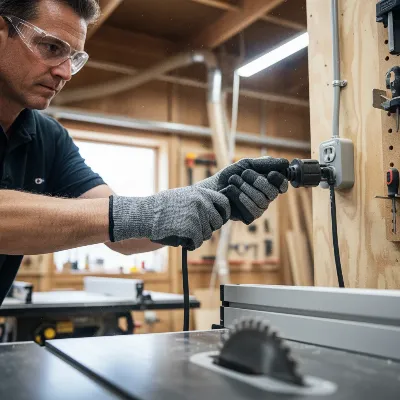 A woodworker wearing safety glasses and gloves, unplugging a table saw. The workspace is clean and well-lit.
Blade Removal and Initial Cleaning
With safety measures in place, you can now proceed to remove the blade from your table saw. Using the appropriate wrench or tool, carefully loosen the arbor nut that secures the blade. Pay close attention to the direction of the nut and any washers, as they must be reinstalled correctly later. Once the nut is removed, gently lift the blade off the arbor, taking care to avoid contact with the sharp teeth even if they are dull.
After removal, the blade will likely have a buildup of pitch, resin, and sawdust. This gunk can significantly impede cutting performance and must be thoroughly cleaned before sharpening. Apply a specialized blade cleaner, a citrus-based degreaser, or a mixture of warm water and dish soap to the blade. Allow it to soak for a few minutes to soften the residue. Then, use a stiff brush, such as a brass brush or an old toothbrush, to scrub away all the accumulated grime from the blade body and between the teeth. Rinse the blade thoroughly and dry it completely to prevent rust. A clean blade allows you to accurately assess its condition and ensures that your sharpening efforts are directed at the carbide tips, not at layers of sticky buildup.
Inspecting the Blade for Damage
Once clean, meticulously inspect your blade for any signs of significant damage. This inspection is vital in determining if home sharpening is a viable option or if the blade requires professional attention or outright replacement. Carefully examine each carbide tooth for chips, cracks, or excessive rounding. Minor dullness is treatable, but a missing tooth, a deeply chipped tip, or a visibly cracked blade plate renders the blade unsafe and unsuitable for home sharpening.
Also, check the blade body for any signs of warping or bending. You can do this by laying it flat on a known flat surface and looking for gaps. If you detect any serious damage that affects the structural integrity of the blade or its overall balance, it’s time to either send it to a professional sharpening service that can re-tip or straighten blades, or simply replace it with a new one. Attempting to sharpen a damaged blade can exacerbate issues and create a hazardous situation.
Setting Up for Sharpening
Proper setup is crucial for consistent and safe sharpening. First, secure your cleaned and inspected blade in a sturdy vise or a dedicated sharpening jig. Position the blade so that the teeth you intend to sharpen are facing you at eye level, providing clear visibility and comfortable access. Ensure the blade is clamped firmly and will not wobble or shift during the sharpening process.
Next, identify a starting tooth. Use a felt-tip marker to put a small dot on this tooth. This simple step helps you keep track of your progress as you work your way around the blade, ensuring you sharpen every tooth once and avoid over-sharpening any particular section. Understanding the specific angles of your blade’s teeth is also important. Table saw blades have various tooth geometries, including different hook angles (the angle of the tooth face) and bevel angles (the angle of the cutting edge). Try to maintain these original factory angles as closely as possible to ensure optimal cutting performance.
The Sharpening Process (Manual Filing)
With your blade securely in place and your starting tooth marked, you’re ready to begin the actual sharpening. Select your fine-grit diamond file or blade hone. The goal is to lightly dress each tooth’s face and, if necessary, the tip edge, while maintaining the original angles.
For most carbide-tipped blades, you’ll be focusing on the face of the tooth (the part that cuts into the wood). Hold the file flush against the original hook angle of the tooth’s face. Apply light, consistent pressure and make 4-6 smooth strokes, always in the same direction. The key is consistency; use the same number of strokes and pressure on each tooth to ensure uniform sharpness. If your blade has alternating top bevel (ATB) teeth, where teeth are angled alternately to the left and right, you’ll need to sharpen them in two passes. First, sharpen all the teeth angled in one direction, then rotate the blade and sharpen all the teeth angled in the opposite direction. Be meticulous about matching the original bevel angle.
After sharpening the face, some blades may also benefit from a very light touch-up on the top edge of the carbide tip. Again, maintaining the original angle is paramount. Avoid aggressive filing, as this can quickly remove too much material and alter the blade’s geometry, potentially compromising its balance and performance. Work slowly and methodically around the entire blade, ensuring each tooth receives equal attention. Once you’ve completed all teeth, give the blade a final wipe-down to remove any fine metal particles.
Testing and Reinstalling the Sharpened Blade
After sharpening, the proof is in the cut. Carefully re-install the blade onto your table saw, ensuring it’s oriented correctly and the arbor nut is tightened securely, but not over-tightened. Restore power to your saw.
Before making any actual cuts on a project, perform a test cut on a scrap piece of wood. Pay attention to how easily the blade glides through the material, the quality of the cut (is it clean and smooth, or still rough?), and any unusual noises or vibrations. A properly sharpened blade should cut with minimal effort, produce clean edges, and operate smoothly. If you’re not satisfied with the results, you may need to revisit your sharpening technique, focusing on angle consistency and applying a few more light strokes to any areas that feel less sharp. Once you’re confident in the blade’s performance, give it a final inspection and proceed with your projects, enjoying the benefits of a rejuvenated cutting edge.
 A woodworker performing a test cut on a scrap piece of wood with a newly sharpened table saw blade.
Advanced Tips for Maintaining Blade Sharpness and Longevity
While knowing how to sharpen your table saw blade is valuable, prevention is often the best strategy. Implementing good maintenance habits can significantly extend the life of your blade’s edge and reduce the frequency of sharpening.
Regular cleaning is perhaps the simplest yet most effective tip. Pitch and resin buildup on the blade can create excessive friction, making the blade act dull even when the carbide tips are still sharp. Make it a habit to clean your blade after every few hours of use, or whenever you notice sticky residue. A quick soak in a blade cleaner solution followed by scrubbing with a brass brush can make a world of difference.
Proper storage is also crucial. When not in use, store your blades in protective sleeves or dedicated blade storage cases. This prevents accidental contact with other tools or surfaces that could chip the teeth or cause rust. Keep your storage area dry and free from extreme temperature fluctuations.
Furthermore, understanding blade types and their specific sharpening needs can help. Different blades are designed for different materials and cuts. Using the correct blade for the task at hand (e.g., a rip blade for ripping, a crosscut blade for crosscutting) reduces strain on the teeth and helps them stay sharper longer. Avoid pushing your blades beyond their intended capacity or cutting materials they aren’t designed for, such as metal or masonry, unless the blade is explicitly rated for it. By integrating these practices into your workshop routine, you’ll find yourself sharpening less and cutting more efficiently.
Safety Best Practices When Operating Your Table Saw
A sharp blade is a safer blade, but it’s only one component of overall table saw safety. Operating this powerful machine demands unwavering attention and adherence to established best practices to prevent serious injury. Never become complacent around a table saw.
Always use the appropriate safety guards and anti-kickback pawls that came with your saw. These are designed to protect you from the spinning blade and to prevent kickback, a dangerous situation where the workpiece is violently thrown back towards the operator. Similarly, always use a push stick or push block when making cuts, especially when your hands would otherwise be close to the blade. Never rely on your hands alone to guide small workpieces.
Ensure your fence is properly aligned and locked before making any cut. A misaligned fence can pinch the wood, leading to kickback. Always stand to the side of the blade, out of the direct line of potential kickback. Moreover, never reach over a spinning blade, and ensure your workpiece is fully supported throughout the cut to prevent it from binding. Finally, always wear appropriate personal protective equipment (PPE), including safety glasses and hearing protection, even when not sharpening. A sharp blade minimizes the force needed to cut, reducing the chance of your hand slipping, and makes the saw operate more predictably, which inherently makes it safer. Integrating a sharp blade with these essential operating procedures creates the safest woodworking environment possible.
“A dull tool forces you to work harder, and that increased effort drastically elevates the risk of an accident. Sharp tools, by contrast, are predictable and precise, making every cut a safer one.” – John Peterson, Master Woodworker and Safety Instructor
Conclusion
Mastering the art of safely sharpening your table saw blade at home is a skill that empowers any woodworker. It extends the life of your valuable blades, ensures consistently clean and accurate cuts, and fosters a deeper connection with your tools. While some carbide blades are best left to professional services, understanding when and how to perform basic sharpening and maintenance yourself can save you time and money. Remember, the core of effective sharpening lies in meticulous preparation, precise execution, and an unwavering commitment to safety. By recognizing the signs of dullness, choosing the right sharpening approach, and following the step-by-step process with diligence, you can confidently restore your blade’s edge and return to crafting with precision and peace of mind. What steps will you take today to ensure your table saw blades are always ready for the next project?
Frequently Asked Questions
Can all table saw blades be sharpened at home?
No, not all table saw blades are ideal for home sharpening. While high-speed steel blades can often be sharpened manually with good results, carbide-tipped blades, especially those with complex tooth geometries, usually benefit more from professional sharpening services. Professional sharpeners have specialized machinery to precisely restore carbide tips and maintain blade balance.
How often should I sharpen my table saw blade?
The frequency of sharpening depends on your usage, the type of material you cut, and the blade’s quality. Look for signs of dullness such as burn marks, increased cutting effort, rough cuts, or excessive noise. Regular cleaning can often extend the time between sharpenings. For heavy users, a blade might need sharpening every few months, while hobbyists might only need it once a year.
What’s the best angle for sharpening table saw teeth?
The “best” angle is typically the blade’s original factory angle, as this is engineered for optimal performance. Different blades have varying hook angles (the face of the tooth) and bevel angles (the cutting edge). When sharpening at home, the goal is to maintain these existing angles as closely as possible, usually around 10-20 degrees for the bevel, using a diamond file or a sharpening jig to guide you.
What are the risks of using a dull table saw blade?
Using a dull table saw blade significantly increases the risk of accidents and degrades work quality. A dull blade requires more force to cut, leading to increased friction, burn marks, and excessive heat. More dangerously, it can cause the wood to bind, resulting in violent kickback, which can cause severe injury. Dull blades also strain your saw’s motor and produce imprecise, splintered cuts.
How do I clean pitch and resin from my blade?
To clean pitch and resin, first remove the blade from the saw and ensure the saw is unplugged. You can use a commercial blade cleaner, a citrus-based degreaser, or a mixture of warm water and dish soap. Allow the blade to soak for a few minutes, then scrub thoroughly with a brass brush or old toothbrush to remove all residue. Rinse the blade completely and dry it immediately to prevent rust.